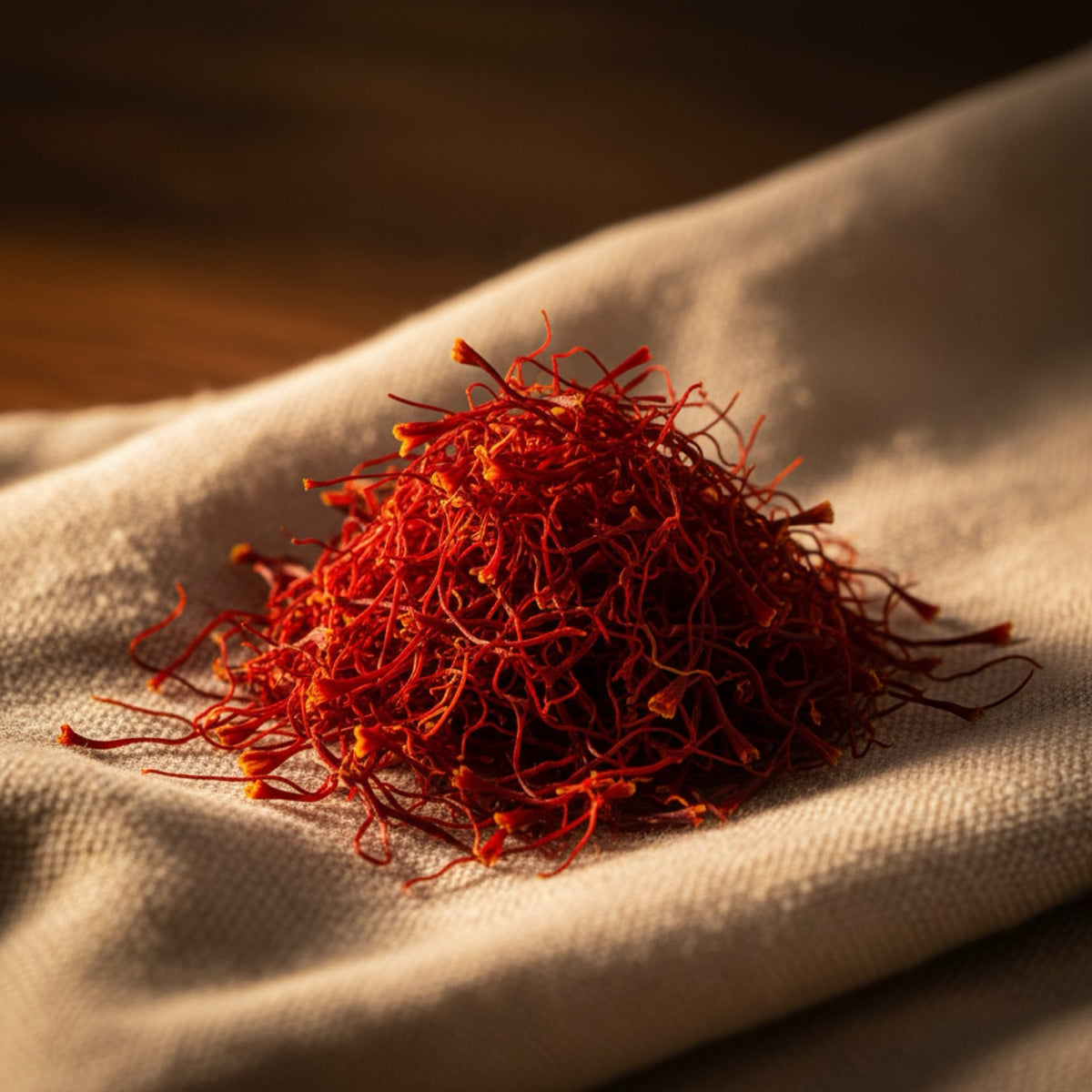

El azafrán tiene un sabor floral y ligeramente a miel, con un toque terroso similar al heno, un susurro de rosa y un final limpio y suavemente amargo, y perfuma un plato tanto como lo aromatiza. El amargor proviene de la picrocrocina (el compuesto del sabor), el aroma del safranal y el color dorado de la crocina. Si tu «azafrán» sabe dulce, metálico o directamente no sabe a nada, probablemente no sea azafrán.
Los tres compuestos detrás del sabor
- Picrocrocina: el sabor. Un amargor agradable, similar al del té, que se percibe como una profundidad sabrosa en el arroz y la crema. Nuestra cosecha actual presenta un valor de 114.2 (ISO 3632).
- Safranal: el aroma. Miel, heno fresco y rosa seca. La mayor parte de lo que «saboreas» en el azafrán es en realidad este aroma. El nuestro: 32.7.
- Crocina: el color. Casi sin sabor, pero responsable del tono dorado intenso; una mayor concentración de crocina significa menos hebras por plato. La nuestra: Categoría I ISO 3632 según los parámetros probados (informe de laboratorio 004389: crocina 296.5, picrocrocina 114.2, safranal 32.7). Ver el informe de laboratorio completo.
A qué sabe el azafrán en platos reales
En el arroz (tahdig, biryani, paella): cálido, redondo, levemente floral; hace que la mantequilla y el arroz sepan «más ricos» en lugar de añadir una nota especiada evidente. En leche o té: con notas de miel y relajante, más cercano a la manzanilla que a cualquier especia salada. En postres (kulfi, panna cotta, sholeh zard): resalta el perfil de rosa y miel. En caldos de marisco (bullabesa, mejillones): añade una sutil profundidad dulce marina que ningún sustituto puede replicar.
A qué NO debería saber el azafrán
- Dulce sin amargor: el azafrán real siempre tiene un final suavemente amargo; el cártamo teñido no.
- Metálico o químico: un sello distintivo de las hebras tratadas con colorantes.
- Como la cúrcuma: un olor a humedad terrosa y picante indica la presencia de rellenos molidos.
- Como si no supiera a nada: hebras viejas, pasadas o agotadas que han perdido su safranal.
¿Tienes sospechas? Realiza las pruebas descritas en nuestra guía para distinguir azafrán real de falso.
Cómo extraer todo el sabor de tus hebras
Nunca eches las hebras secas directamente a la olla; los compuestos de sabor necesitan tiempo y líquido para disolverse. Tritura unas 25 hebras (0.1 g) para un plato de cuatro personas, déjalas reposar en 2 cucharadas de agua tibia (no hirviendo) durante 10–15 minutos y añade el líquido dorado al final de la cocción. Técnica completa en cómo infusionar azafrán de 4 formas, y cantidades exactas en la guía de dosificación o en nuestra calculadora de azafrán.

Preguntas frecuentes
¿A qué se parece el sabor del azafrán?
Nada es exactamente igual, pero la descripción más cercana es miel y heno fresco con un toque de rosa y un final suavemente amargo, similar al té. La vainilla comparte su calidez de postre y la cúrcuma comparte su color, pero ninguna sabe como el azafrán.
¿Por qué mi azafrán sabe amargo?
Un ligero amargor es correcto; es la picrocrocina, el compuesto que define el sabor del azafrán. Un amargor fuerte y desagradable suele significar que usaste demasiadas hebras o que las herviste directamente en lugar de infusionarlas primero en agua tibia.
¿El azafrán sabe dulce?
El azafrán huele dulce (notas de miel y florales del safranal), pero no sabe azucarado. Si las hebras saben claramente dulces sin un final amargo, pueden ser de cártamo teñido en lugar de azafrán real.
¿Por qué no puedo sentir el sabor del azafrán en mi plato?
Tres razones comunes: las hebras eran viejas (el safranal se desvanece después de unos 2 años), no se infusionaron en líquido tibio primero o la dosis fue demasiado pequeña. Usa unas 25 hebras trituradas (0.1 g) para un plato de cuatro personas, infusionadas durante 10–15 minutos.
¿El azafrán de alta calidad sabe diferente al barato?
Sí, notablemente. Las hebras con alto contenido de crocina y safranal (ISO 3632 Categoría I) aportan más aroma y color por hebra, por lo que los platos tienen un sabor más pleno utilizando menos cantidad. El azafrán de baja calidad o adulterado necesita el doble de cantidad para un resultado más débil.
Si las hebras en tu cocina saben planas o extrañamente dulces, la solución suele empezar por el vendedor: nuestra reseña honesta de marcas de azafrán analiza qué marcas estadounidenses realmente ofrecen el aroma que prometen.