
Saffron allergies are rare but real. The most common reaction is to inhaled saffron pollen (occupational, in farmers). Food allergy is uncommon. Symptoms can include itching, hives, or — in very rare cases — anaphylaxis. If you suspect a reaction, stop using it and see a doctor.
Who's at risk
People with known plant pollen allergies, especially to Iridaceae family plants (iris, gladiolus, crocus).
Editor's note
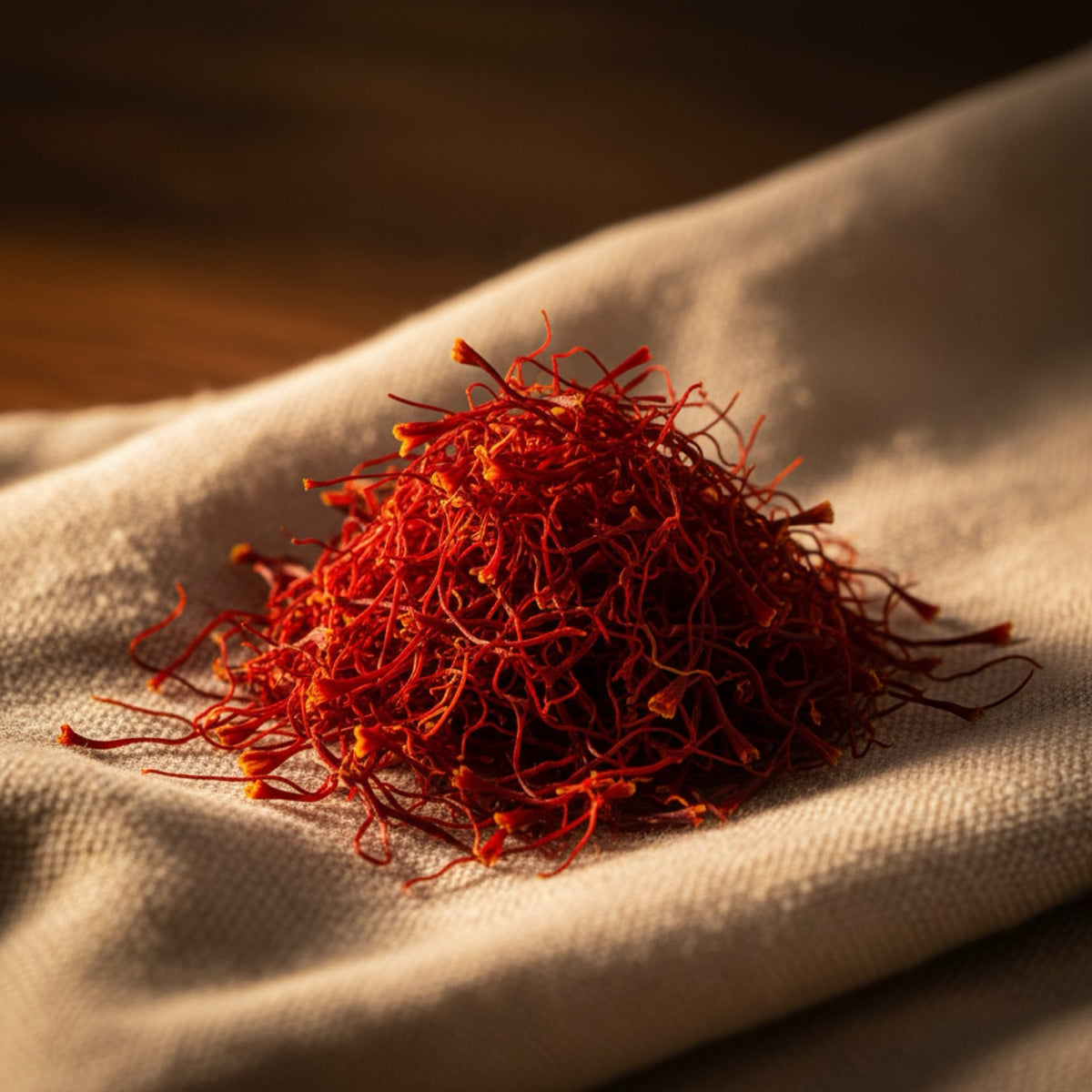
Whole, harvest-dated threads from a single farm let you know exactly what's in the jar — no fillers, no mystery blends. If you're being cautious with a new ingredient, that traceability makes it easier to know what you're actually reacting to, versus a bulk blend of unknown origin.
What to do if you react
- Stop using saffron.
- Take an antihistamine if your doctor has approved it for you.
- Severe reactions (swelling, breathing trouble): call 911.
- See an allergist.

Continue reading