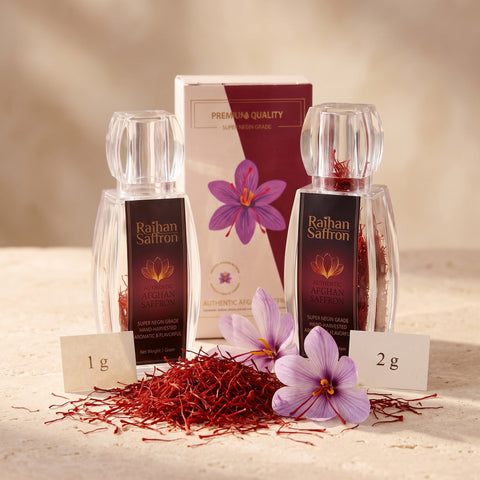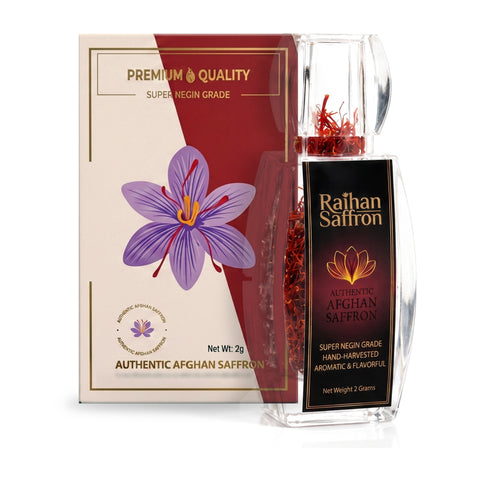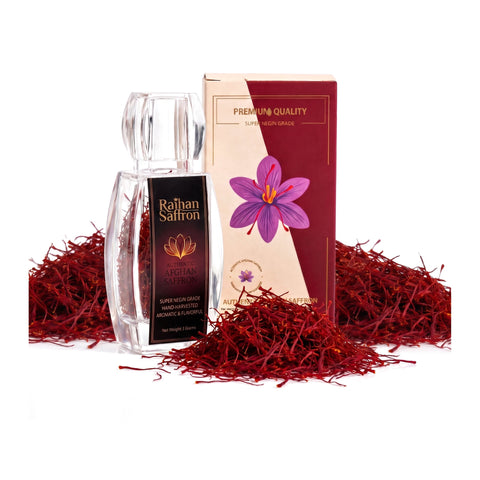

The short answer: you can buy saffron at large grocery chains (Costco, Trader Joe's, Whole Foods), at Middle Eastern / South Asian markets, or online direct from an importer. Grocery saffron is real but usually lower-grade and undated; ethnic markets offer better value if you know how to inspect threads; buying direct from a single-origin importer online is the only option where you can check the harvest year and lab grading before paying. For verified quality, buy from a brand that publishes its ISO 3632 report — like Raihan Saffron (Herat Super Negin, Crocin 296.5, packed in Lynn, MA).
The saffron this guide is about: all-red Afghan Super Negin from our family's own fields in the Herat highlands, lab-tested ISO 3632 Category I on the tested parameters (report 004389). Raihan's own prices: 1 g $20, 3 g $45 ($15 a gram), 10 g $99 ($9.90 a gram). 3 g bottle — about 30 dishes, $45 · 10 g — about 100 dishes, $99. Free US shipping over $39, 30-day money-back guarantee. Work out what one dish costs with the saffron calculator.
Or skip the aisle
Buy it from the people who packed it
All-red Afghan Super Negin threads, laboratory report 004389 published in full, sealed and hand-packed in Lynn, Massachusetts. Same-day shipping, Monday to Saturday, on orders placed by 4 PM ET. Free US shipping over $39, and a 30-day money-back guarantee if the threads are not what this page describes.
The lot in the bottle
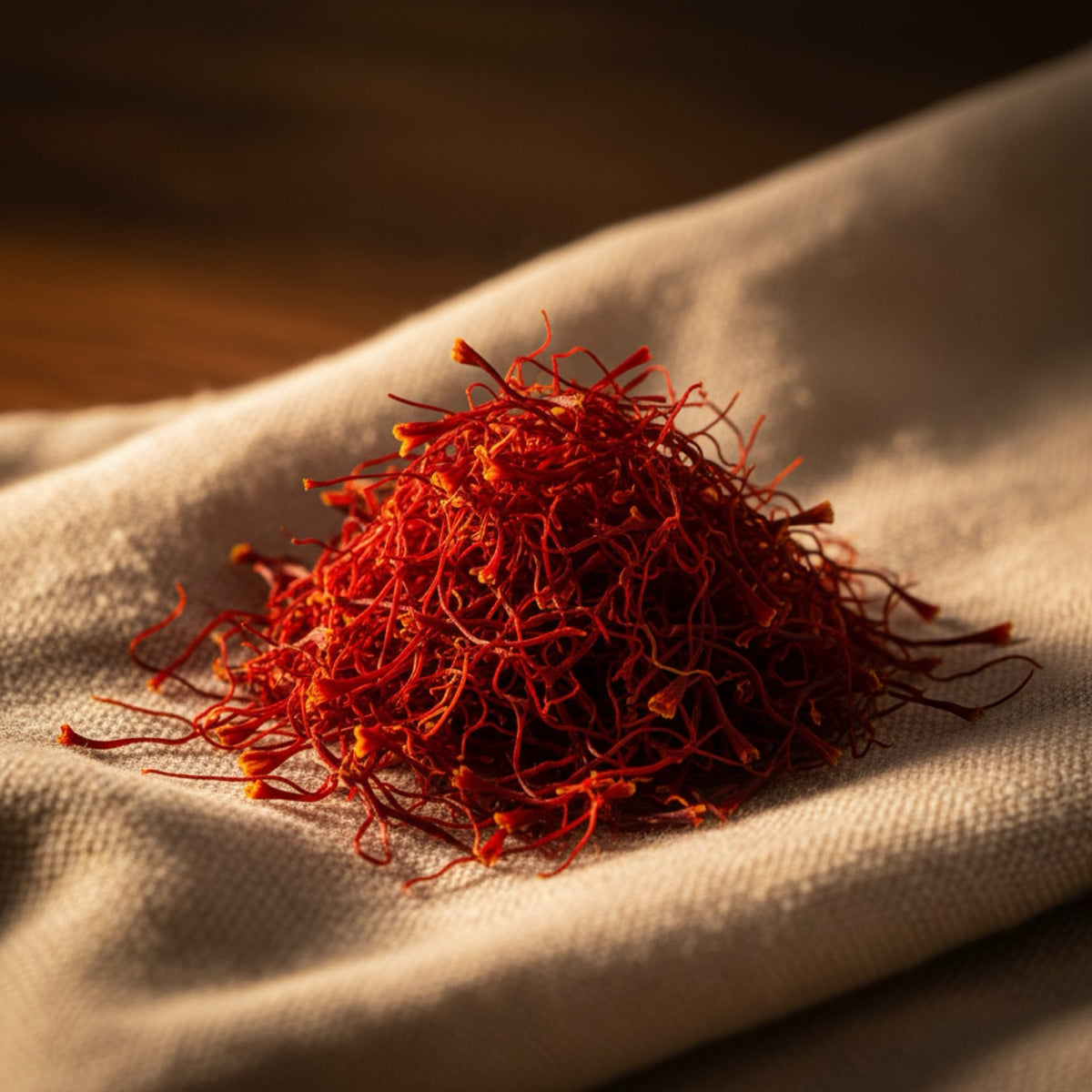
Everything below is written by a saffron seller, so here is the evidence first. Our current lot carries Herat government laboratory report 004389: crocin 296.5, picrocrocin 114.2, safranal 32.7. That is ISO 3632 Category I on every tested parameter. About 250 all-red threads to the gram, hand-packed in Lynn, Massachusetts.
Option 1: Big grocery chains (Costco, Trader Joe's, Whole Foods)
Most large chains carry saffron seasonally or in small glass jars near the spice rack. It is genuine saffron, but typically Spanish or Iranian Sargol of unstated grade, packed months or years before you buy it, with no harvest date. Expect $10–$25 for 0.5–1 g. Fine for occasional use; weak color yield per gram compared with fresh Super Negin — you use more threads for the same dish, so it is rarely the bargain it looks like.
Option 2: Middle Eastern, Persian, and South Asian markets
Often the best in-person option. Markets serving Persian, Afghan, Arab, or Indian communities take saffron seriously and turn over inventory faster. Look for all-red threads, trumpet-shaped tips, a named origin, and a packing or harvest date. In Massachusetts and Connecticut you can find our bottles at independent markets; see our stockist list or the Boston and Massachusetts guide.
Option 3: Buying saffron online (what to check first)
Online direct-from-importer is where quality-per-dollar is best — and where the worst fakes live. Before you buy from any site or marketplace listing, check five things:
- Named region, not just a country (“Herat, Afghanistan” beats “imported”).
- Harvest year printed on the label — saffron fades measurably after 2 years.
- Grade evidence: an actual ISO 3632 lab report, not just the word “premium.”
- All-red threads in the photos — yellow style padding means lower grade by weight.
- A real return policy — honest sellers take saffron back.
Amazon listings deserve extra caution: commingled inventory and third-party sellers make adulteration harder to trace. Our guide to buying saffron online without getting scammed covers the tests in depth.
Price check: what should saffron cost in 2026?
Genuine retail saffron costs about $5 to $26 per gram in the United States in 2026, and lab-graded single-origin Super Negin about $10 to $20. Meaningfully cheaper than that per gram — especially large “1 oz for $30” listings — is the single strongest fraud signal in this category. Full numbers in our 2026 saffron price guide.
The bottom line
If you cook with saffron a few times a month, buy a 1–2 g harvest-dated bottle from a single-origin importer and skip the supermarket jar. You will use fewer threads per dish and taste the difference in the first pot of rice.

Frequently asked questions
Does Costco or Trader Joe's sell real saffron?
Yes — both sell genuine saffron, usually Spanish or Iranian origin. It is real but undated and of unstated grade, so color strength per gram is typically well below fresh Super Negin. It works for occasional cooking; per dish it is often no cheaper than higher-grade thread bought by the gram.
Is it safe to buy saffron on Amazon?
It can be, but it is the highest-risk channel: commingled inventory, third-party sellers, and repackaging make fakes harder to trace. If you buy there, choose a brand that names its region, dates the harvest, and publishes lab grading — and run the water test when it arrives.
Where can I buy saffron near me?
Check Middle Eastern, Persian, Afghan, or Indian grocery markets first — they carry better saffron than mainstream chains. In Massachusetts and Connecticut you can find our bottles at independent markets; see our stockist list or the Boston and Massachusetts guide. Elsewhere in the US, we ship from Lynn, MA with free shipping over $39.
How much should 1 gram of saffron cost?
In 2026, genuine retail saffron costs about $5 to $26 per gram in the United States, and lab-graded single-origin Super Negin about $10 to $20. Prices far below that per gram are the strongest warning sign of dyed corn silk, safflower, or expired stock.
What is the best saffron to buy?
All-red Super Negin threads from a named region, with the harvest year on the label and a published ISO 3632 lab report. See our ranked list of the best saffron brands in the US.
Searching “saffron near me”? Read this before you drive
Grocery-store saffron can sit in a distribution chain for months before it reaches the shelf, and the harvest date is rarely printed anywhere. Specialty and ethnic markets are a better bet — see the store-by-store guidance above — but if you want threads with the harvest year stamped on the bottle, buying direct from the importer is the freshest route.
Ships from our U.S. stock: every Raihan bottle is independently lab-tested to ISO 3632 Category I and ships free over $39 — see all sizes from 1 g to 1 kg, or start with the Starter Kit. Comparing brands first? Our guide to the top saffron brands compared covers lab results and price per gram.