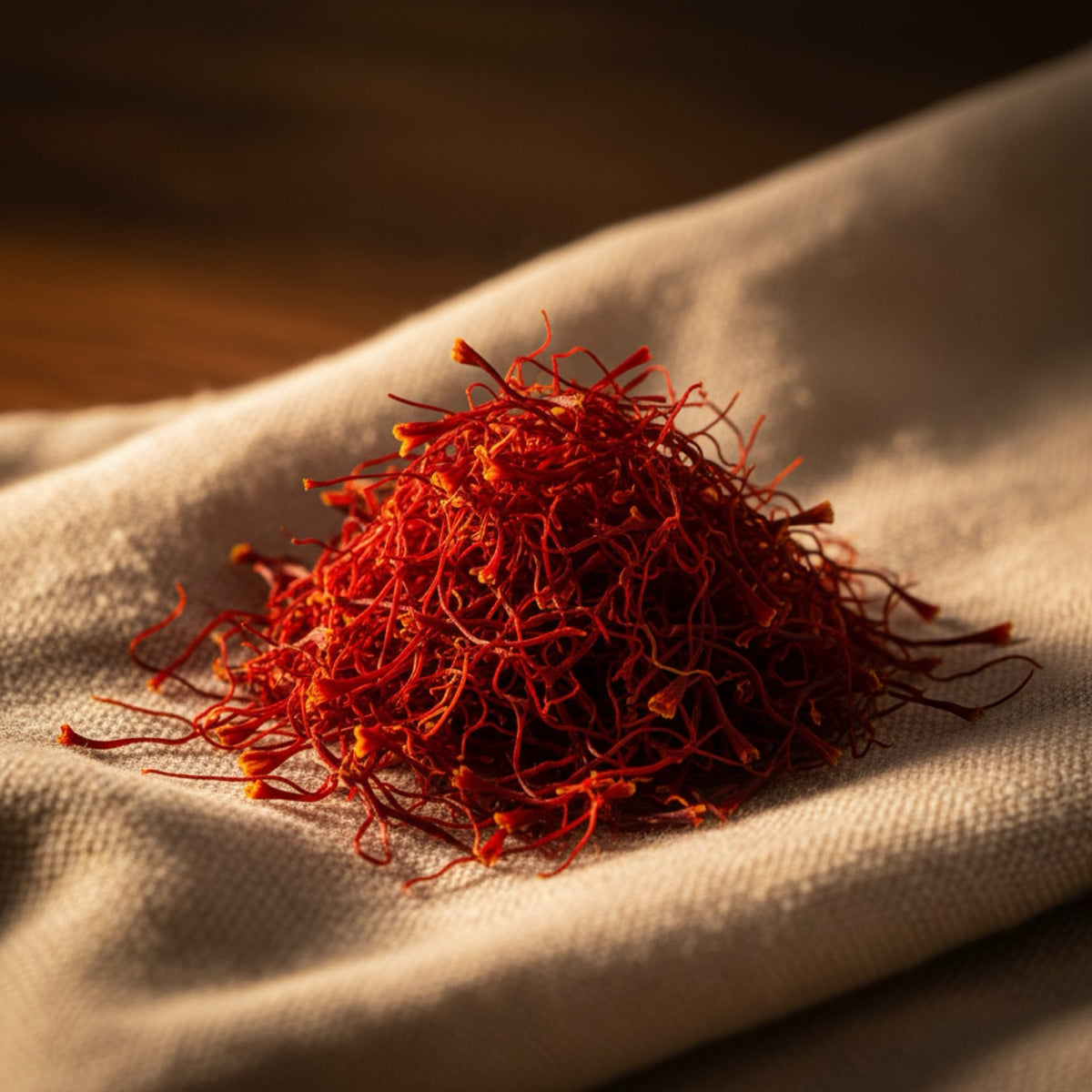

Real saffron threads are deep red, slowly release a clear golden-yellow color in warm water (not orange or red), keep their red color even after sitting in water for 20 minutes, smell strongly of honey and hay, and taste slightly bitter. Fake saffron usually bleeds color instantly, dyes water bright red or orange, or smells of nothing at all.
The lot in the bottle
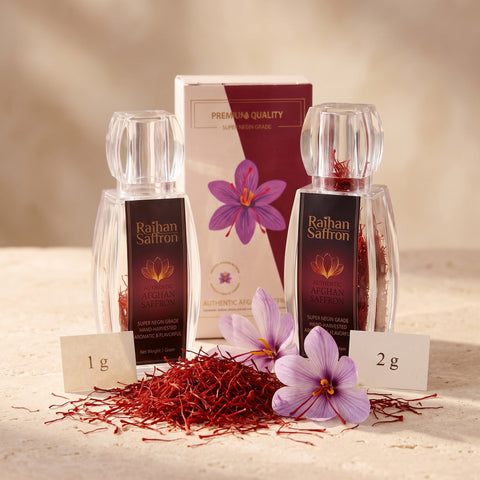
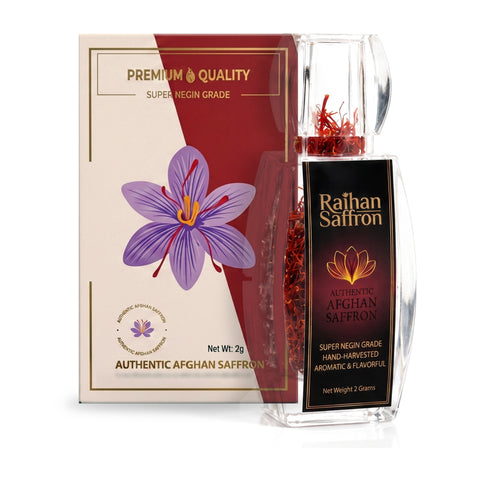
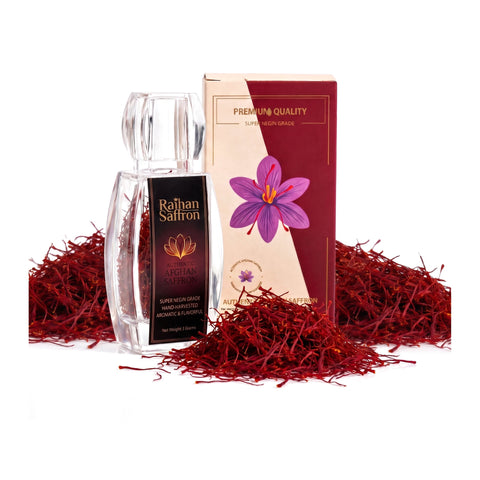
Everything below is written by a saffron seller, so here is the evidence first. Our current lot carries Herat government laboratory report 004389: crocin 296.5, picrocrocin 114.2, safranal 32.7. That is ISO 3632 Category I on every tested parameter. About 250 all-red threads to the gram, hand-packed in Lynn, Massachusetts.
Why fake saffron is everywhere
Because real saffron is the most expensive spice in the world by weight, every shortcut imaginable has been tried. The most common substitutes are safflower petals, marigold petals, dyed corn silk, shredded red beets, dyed coconut fibers, and turmeric mixed with food coloring. Sometimes real saffron is "stretched" with these fillers.
Test 1: The water test (the most reliable)
Drop a few threads into a small glass of room-temperature water. Wait 10–15 minutes. Watch from the side. Real saffron threads slowly release a clear, golden-yellow color and keep their red color the whole time. Fake saffron either dyes the water red/orange immediately or fades within minutes.
Test 2: The crush test
Rub a thread between your thumb and forefinger. Real saffron will leave a yellow-orange stain on your fingers and is slightly oily. Fake saffron made from paper or plant fibers will crumble and not stain consistently.
Test 3: The smell test
Open the bottle and smell. Real saffron has a strong honey-hay aroma — warm, slightly sweet, slightly grassy, slightly leathery. Fake saffron usually smells of nothing, or has a chemical/vinegar smell from dyes.
Test 4: The taste test
Place one thread on your tongue. Real saffron tastes slightly bitter at first, then floral. If it tastes sweet, it has been soaked in honey or sugar water — a common adulteration that adds weight.
Test 5: The baking soda test
Mix a pinch of warm water with a small pinch of baking soda. Drop in your threads. Real saffron turns the liquid golden yellow. Fake saffron (especially dye-based fakes) often turns the liquid dark red.
Test 6: The cold water test
Real saffron will eventually color cold water golden yellow, but it takes 30–60 minutes. Fakes either bleed color instantly or never bleed at all.
Test 7: The thread shape
Real saffron threads are trumpet-shaped: thicker at the top (the stigma tip) and slightly thinner at the base. Fake ones — especially safflower fakes — are flat, straight, or look like shredded paper.
What real Raihan Saffron looks like
Deep dark red, all-red (no yellow attached), uniform 4–7 mm threads, strong honey aroma when you open the bottle, slow golden bloom in warm water. Every bottle is hand-imported from Herat, Afghanistan and packed in Lynn, Massachusetts — and backed by a published ISO 3632 Category I lab report (Crocin 296.5).
Skip the guesswork
Buy saffron that arrives with the lab report attached.
Every Raihan lot is independently graded to ISO 3632 Category I — our current lots test Crocin 296.5, far above the Category I threshold. If a bottle ever fails your water test, it's a 30-day refund. No questions.
See the lab report Shop the harvestFrequently asked questions
How can you tell if saffron is real?
Drop a few threads in warm water and wait 10–15 minutes. Real saffron slowly releases a clear golden-yellow color while the threads keep their red color; it smells of honey and hay and tastes slightly bitter. Fake saffron bleeds red or orange instantly, or smells of nothing.
Why is my saffron turning the water red instead of yellow?
That is a red flag. Real saffron blooms golden-yellow. Threads that dye water red or orange right away have been colored with dye or are safflower — not genuine saffron.
Can I get a refund if my saffron is fake?
From credible vendors, yes. Raihan Saffron offers a 30-day return if a bottle does not pass the water, smell, and taste tests.
Is cheap saffron real?
Rarely. Genuine saffron costs about $4–$10 per gram; anything under about $2 per gram is almost always adulterated or safflower dressed up as saffron.
Is “Spanish saffron” always real?
Not necessarily. Much “Spanish saffron” is genuinely Iranian saffron repacked in Spain, but some is safflower. Always run the water test before you trust it.
Not sure what you're holding? Run it through our interactive Is Your Saffron Real? checker and field guide — an 11-chapter buyer's guide with a 60-second authenticity scorecard.
Once you know how to spot a fake, the next question is who to actually buy from — see our ranked comparison of saffron brands to find out which sellers publish lab reports and which ones don't.
Want proof, not promises? Every Raihan lot is independently lab-tested to ISO 3632 Category I — crocin 296.5 — and we publish the certificate on our lab report page. Start with a 1 g bottle and run the cold-water test on it yourself. Still comparing sellers? Our breakdown of the best saffron brands shows which ones publish lab results at all.