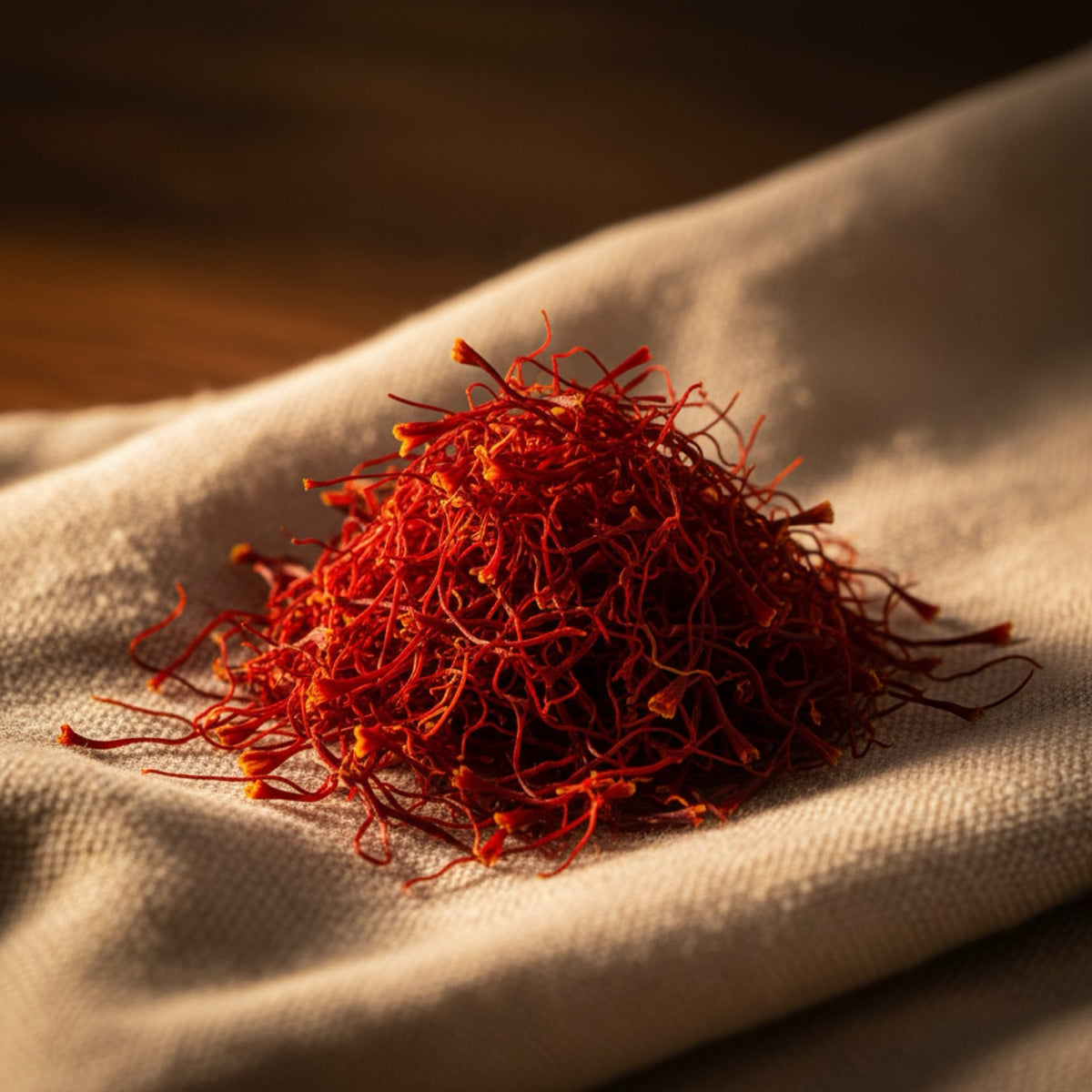

Quick answer. Look for (1) named origin (country AND region), (2) listed harvest year, (3) cut/grade (Negin/Super Negin/Sargol), (4) an airtight rigid bottle or tin, never a thin plastic pouch, (5) a price that makes sense (about $4–$10/g). Avoid: vague labels, no harvest year, suspiciously low prices, and powder.
The five green flags
- Named origin. "Herat, Afghanistan" or "Khorasan, Iran" beats "imported."
- Harvest year on the bottle.
- Grade printed. Negin, Super Negin, Sargol.
- Airtight packaging. A rigid sealed bottle or tin, not a plastic baggie.
- A return policy.
Editor's note
Whatever you buy, run the water test the day it arrives: drop three or four threads into a small glass of warm water. Real saffron tints the water a clear golden yellow little by little over ten to fifteen minutes while the threads themselves stay red. An instant burst of orange-red color usually means dye — and a seller worth returning to.
The nine red flags
- No harvest year.
- No country of origin.
- Listed as "saffron powder" only.
- Threads that look bright orange/yellow in product photos.
- Below $2/g.
- Generic Amazon brand with hundreds of identical 5-star reviews.
- "American saffron" or "Mexican saffron" (those are safflower).
- Listed by weight in oz with no gram conversion.
- Threads photographed in clear glass jar in direct sunlight.
Five questions to ask a saffron seller
- What is the country and region of origin?
- What is the harvest year?
- What is the cut?
- Do you provide a certificate of analysis or ISO 3632 test?
- Will you refund if the saffron fails an at-home water test?

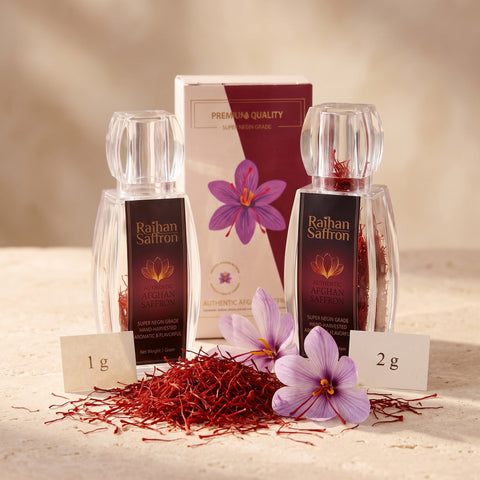
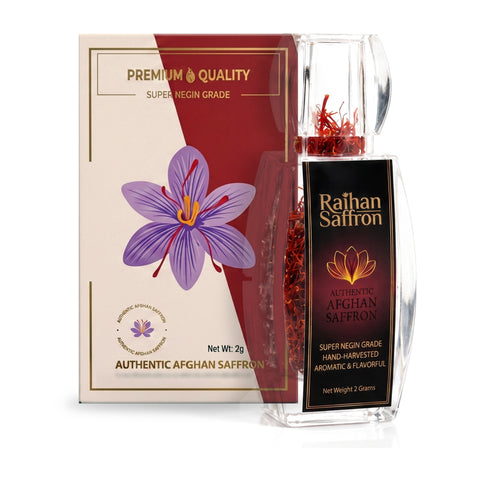
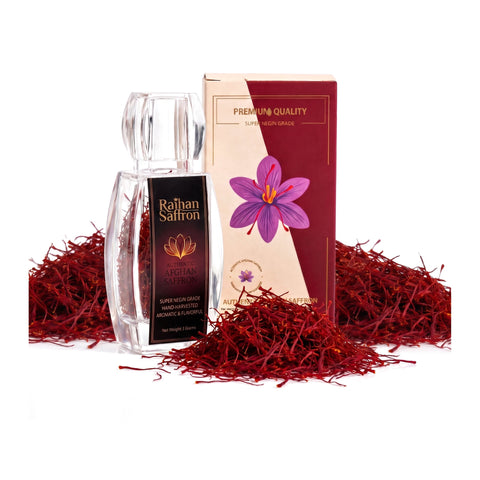
How Raihan Saffron answers all five questions
- Origin: Herat, Afghanistan — single region, no blending.
- Harvest year: printed on every bottle.
- Cut: All-red Negin (Super Negin on select lots).
- COA: available on request for wholesale orders.
- Returns: 30-day, no questions asked.
Continue reading
If you would rather start from a shortlist than vet every listing yourself, we put the major US sellers through these same five questions in the 10 best saffron brands compared.