
Walk into a Persian grocery store and you will see saffron sold under half a dozen names — Super Negin, Negin, Sargol, Pushal, Bunch, Konj — at prices ranging from $3 to $20 per gram. The labels can feel arbitrary. They are not. Each name describes a specific cut of the saffron thread, a specific way the harvest was sorted, and a specific lab-test range for color, taste, and aroma.
The lot in the bottle
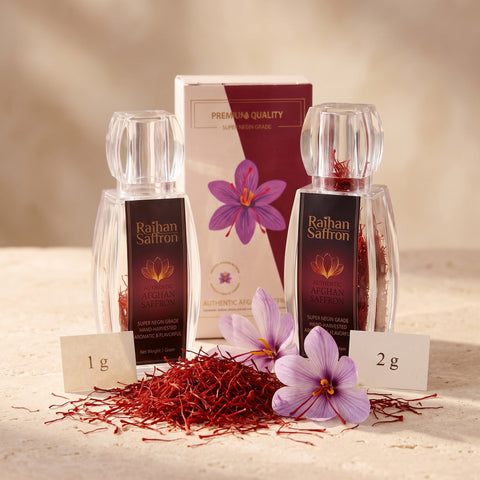
Everything below is written by a saffron seller, so here is the evidence first. Our current lot carries Herat government laboratory report 004389: crocin 296.5, picrocrocin 114.2, safranal 32.7. That is ISO 3632 Category I on every tested parameter. About 250 all-red threads to the gram, hand-packed in Lynn, Massachusetts.
Here is what the grades actually mean, what they look like, and what they are worth.
The science behind the grade: ISO 3632
Before the marketing names, there is a global standard. ISO 3632 is the international specification for saffron quality, and it measures three things in a laboratory spectrophotometer:
- Crocin — the carotenoid pigment responsible for color. Measured at 440 nm. The higher the reading, the deeper the gold the saffron will color a dish.
- Picrocrocin — the bitter taste compound. Measured at 257 nm. Develops the characteristic saffron flavor.
- Safranal — the volatile aroma compound. Measured at 330 nm. What you smell when you open a fresh bottle.
ISO 3632 Category I is the standard's highest category; lot 004389 meets it on the tested parameters (crocin 296.5, picrocrocin 114.2, safranal 32.7).
So when you hear "Grade I saffron," that is a lab number, not a marketing name. The marketing names — Super Negin, Negin, Sargol, Pushal — describe the physical cut of the thread, which then maps loosely onto the lab numbers.
Editor's note
A freshness check that works across every grade: pinch a single thread between two fingers. Properly dried, recent-harvest saffron snaps crisply; older or under-dried stock bends like damp paper. Crispness will not tell you the cut, but it tells you the bottle was handled well — and dried saffron that snaps has kept far more of its safranal aroma.
The grades, top to bottom
Super Negin
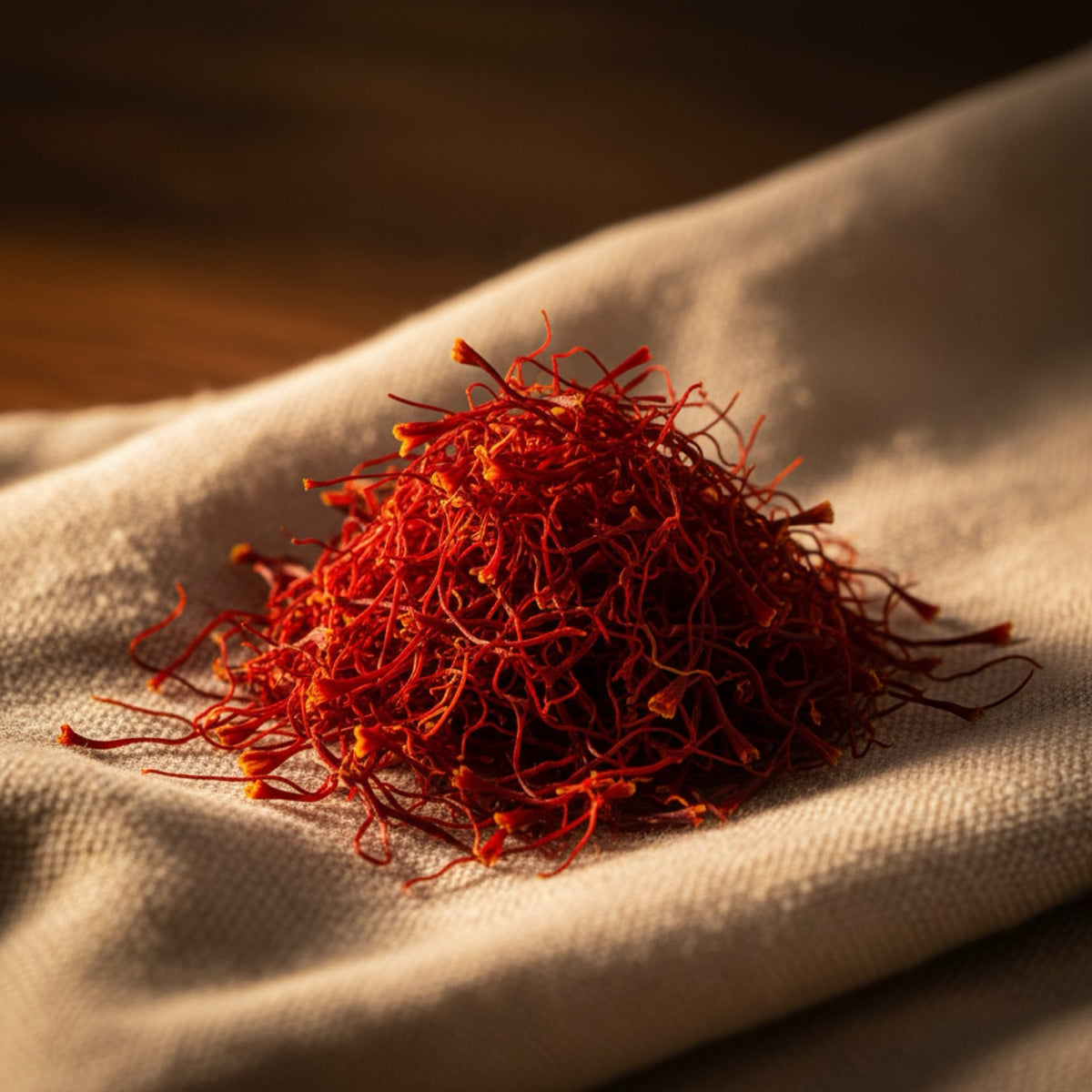
The highest grade on the market. Super Negin threads are pure red stigma, cut entirely without the white or yellow style at the base. The threads are long (typically over 2 cm), broad, brittle when dry, and uniform in color from tip to root. Crocin levels regularly test in the 240–280+ range — well above the Category I threshold.
What it looks and smells like: deep blood-red, almost glossy. A new bottle should hit your nose immediately with a sweet-hay aroma the moment you open it. Threads should break crisply between your fingers, not bend.
Price norms (US, 2026): $14–$22 per gram retail. Real Super Negin sold below $10 per gram is almost always a labeling shortcut for a lower grade.
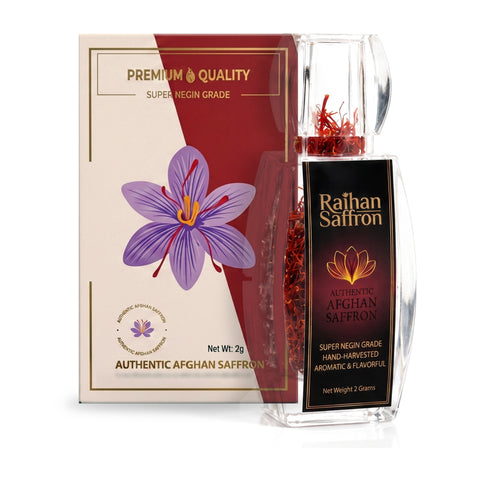
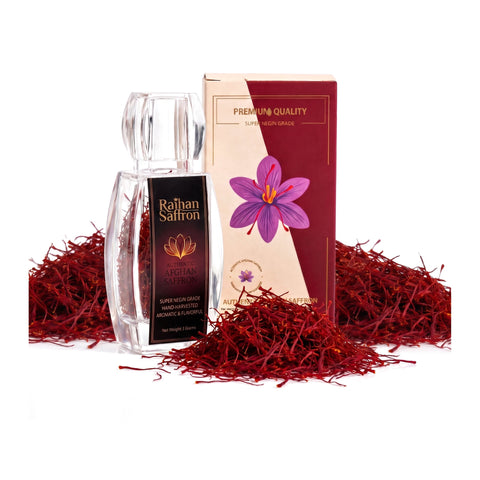
This is the grade we sell. Our 2 g bottle is Super Negin from Herat, Afghanistan.
Negin
One step down from Super Negin. The threads are still all red stigma with no style attached, but they are not as uniformly long or broad. You will see some shorter threads mixed in. Crocin typically tests 210–240 — still firmly Category I.
For most home cooks, Negin is excellent and nearly indistinguishable from Super Negin in finished dishes. The aroma is slightly less intense; the visual presentation is less striking.
Price norms: $9–$14 per gram.
Sargol
Sargol is a confusing one because the name historically meant something different than it does today. The Persian word translates literally to "top of the flower," and for centuries it referred to the topmost portion of the red stigma — ostensibly the most aromatic part. In old Persian commerce, sargol was considered the elite grade.
In modern grading, Sargol is the all-red stigma cut, like Negin, but the threads are typically shorter and somewhat brittle from the cutting process. Most modern sargol tests at Category I or upper Category II crocin levels. It is excellent saffron — but the modern grading hierarchy has pushed Negin and Super Negin above it. Treat it as a step below Negin, despite the historical romance of the name.
Price norms: $8–$12 per gram.
Pushal
Pushal includes the red stigma plus a short section of the yellow style at the base — typically about 2–3 mm of style attached to each thread. Because the style itself has minimal coloring strength, pushal as a whole tests lower on crocin, usually Category II.
The style adds a slight earthy note to the aroma that some traditional Persian cooks actively prefer in stews and pickles. For most modern uses, though, pushal is a value tier rather than a quality tier.
Price norms: $6–$9 per gram.
Bunch (Dasteh)
The traditional rural cut: the entire stigma tied in small bunches with no separation of red from yellow. Visually unmistakable — you can see roughly half red, half pale yellow. Crocin levels are low (Category III or IV) because so much of the weight is the inert style.
Bunch saffron is rarely exported to high-end markets, but it is still widely used in regional cooking and as a cheaper option in bulk applications.
Price norms: $3–$6 per gram.
Konj (white style only)
The bottom of the market: the white-yellow style with no red stigma. Konj has minimal coloring strength and very little aroma. It is occasionally sold as cheap "saffron" in markets but it is genuinely a different product than what most cooks mean by saffron.
How to tell what you are actually buying
Four signals to check before you trust a label:
- Look: Real high-grade saffron is uniformly deep red with trumpet-flared tips on the threads. If you see significant yellow or white, it is not Super Negin or Negin no matter what the label says.
- Smell: A new bottle should smell unmistakably of saffron — sweet, hay-like, faintly metallic — from the moment you open it. A weak aroma usually means old stock or a lower grade.
- Test: Drop a few threads into warm water. Real saffron releases color slowly over 10–15 minutes and the threads stay red. Dyed substitutes (often safflower or paprika strands) bleed color instantly and the threads turn pale.
- Ask for an ISO number: Reputable vendors will tell you the crocin reading on the batch. We test ours.
For more on origin and provenance, see our companion guide to Afghan vs Persian saffron.
How to use Raihan Super Negin saffron for the right grade match
If you are coming to saffron seriously — cooking it weekly, pouring it into rice and stews and tea — buy the highest grade you can afford. The price differential between Super Negin and Pushal at the gram level is real, but the recipe-level cost is small: even at $20/g, a serving of saffron rice contains 30–40 cents of saffron.
The grade you buy shows up in three places: the depth of color the dish takes, the strength of the aroma at the table, and how long a bottle of threads lasts (higher-grade saffron is more aromatically potent, so you use fewer threads per dish).
For everyday cooking, our 2 g bottle covers a full month of weekly rice and tea. For a serious gift or a once-a-year showcase dish, the 5 g bottle is the move.

Frequently asked questions
Is Super Negin actually worth the price over Negin?
For the home cook tasting side by side, the difference is subtle but real — a slightly deeper color, a longer-lasting aroma after blooming, and visually more impressive threads. If you cook saffron often, the per-dish cost difference is small enough that we recommend buying the top grade. If you cook saffron rarely, Negin is excellent.
Does saffron grade change with origin (Iran vs Afghanistan vs Spain)?
The grade names are the same, but the typical quality of "Super Negin" varies by origin. Herati (Afghan) and Khorasani (Iranian) Super Negin both test at Category I+ levels. Spanish coupe (the Spanish equivalent of Sargol) is excellent but the supply is small. Kashmiri Mogra is a separate naming system that maps approximately to Super Negin in quality but is rarely available outside India.
What does "Coupe" mean?
Coupe is the French/Spanish term for the all-red stigma cut, equivalent to Sargol or Negin depending on the source. You will see it on Spanish and French-imported saffron.
Can I tell the grade just by looking?
You can tell the broad category — all-red threads (Sargol/Negin/Super Negin) versus mixed (Pushal/Bunch) is obvious. Distinguishing Super Negin from Negin from Sargol by sight alone takes practice and good lighting; the lab numbers are the only definitive answer.Does powdered saffron have a grade?
Technically yes, but in practice powdered saffron is almost always lower-grade thread (or adulterated). We strongly recommend buying whole threads only and grinding at home if a recipe requires powder.
Buying with eyes open
Saffron grading is one of the few areas in the spice world where the marketing names actually correspond to measurable lab differences. The price-per-gram you pay should track the crocin reading you get — and a vendor who will not share that number is one to walk away from. Start with a 2 g bottle of tested Super Negin and taste the top of the market for yourself.
Continue reading
How to Buy Real Saffron Online Without Getting Scammed
Grades only mean something when a seller can back the label with a number, which is why we tracked which saffron brands publish lab reports and which ones simply print "Super Negin" on the jar.
Trade grades such as Sargol, Negin and Super Negin describe how the threads look; ISO 3632 categories come from laboratory tests. See what Super Negin means and how to check it at home.