
The lot in the bottle
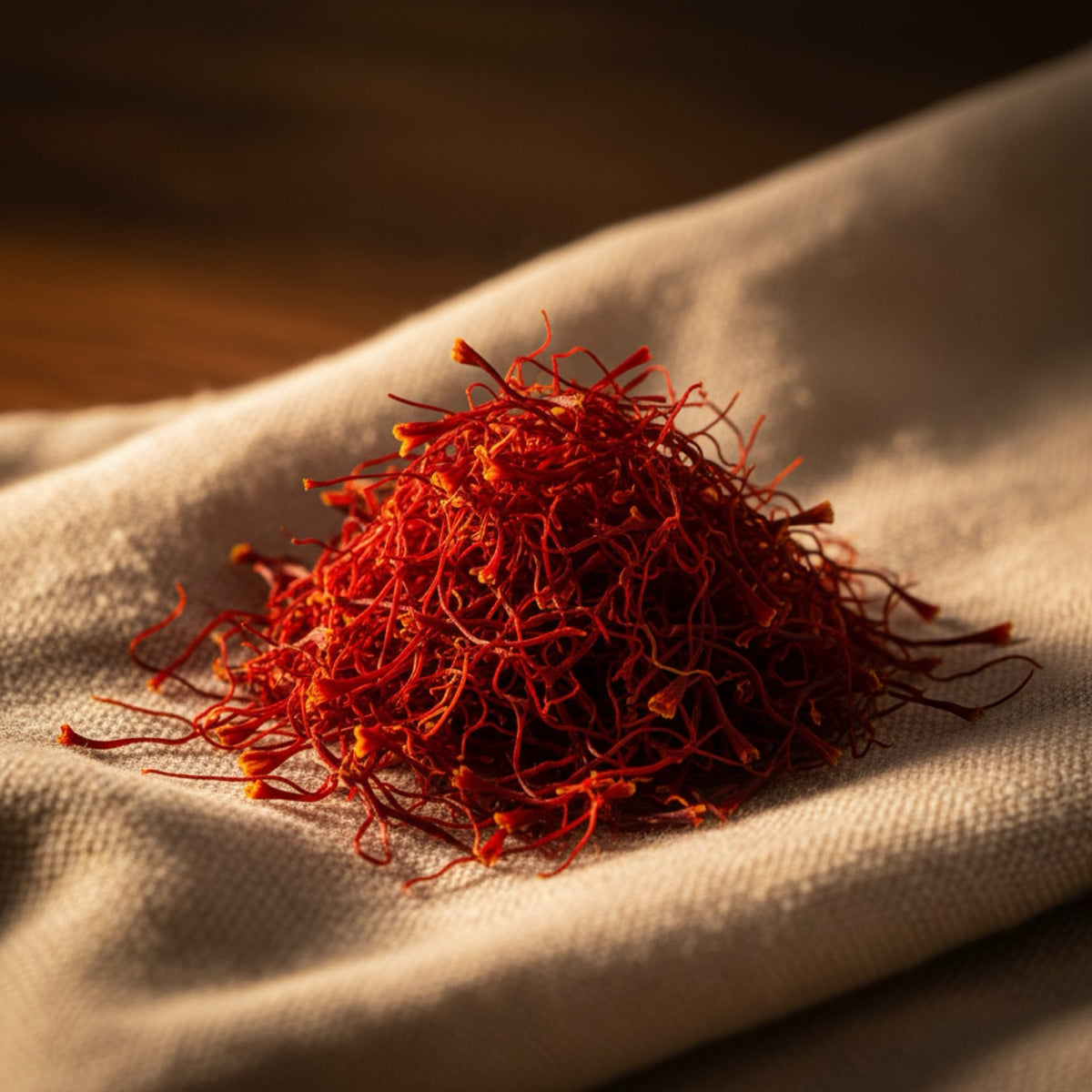
Everything below is written by a saffron seller, so here is the evidence first. Our current lot carries Herat government laboratory report 004389: crocin 296.5, picrocrocin 114.2, safranal 32.7. That is ISO 3632 Category I on every tested parameter. About 250 all-red threads to the gram, hand-packed in Lynn, Massachusetts.
The short answer
Four great origins — but Herat, Afghanistan is the one to beat.
Iran produces ~90% of the world's saffron and is the price-setter; Afghan saffron (especially from Herat) is widely considered the most concentrated; Spanish saffron is renowned for its tradition but most "Spanish" saffron sold today is actually Iranian saffron repacked in Spain; Kashmiri Mongra is short, deep red, intensely aromatic, and the rarest of the four.
Iran
Climate: Hot, dry summers, cold winters in Khorasan province. Style: Most production is Negin and Sargol. Strengths: Massive scale, consistent quality, lab-tested. Notes: US sanctions make direct US import difficult; almost all "Iranian saffron" sold in the US passes through a third country first.
Afghanistan (Herat)
Climate: Continental, high-altitude, similar to Iranian Khorasan. Style: Almost exclusively all-red Negin and Super Negin. Strengths: Often higher crocin (color) values than Iranian. Notes: Smaller scale = better traceability; family farms still dominate.
Spain
Climate: La Mancha plateau, hot/dry. Style: Coupé (similar to Sargol) and Mancha. Strengths: Long European tradition, recognizable PDO. Notes: Real Spanish output is small. Be skeptical of cheap "Spanish saffron" online.
Kashmir
Climate: Pampore plateau, ~5,200 ft altitude. Style: Mongra (top tip, similar to Sargol). Strengths: Considered by many connoisseurs the most aromatic. Notes: Production has dropped sharply since the 1990s due to water issues. True Kashmiri is hard to find and expensive.
Side-by-side feel
- Aroma: Kashmiri > Afghan > Iranian > Spanish (on average).
- Color (crocin): Afghan ≈ Iranian > Kashmiri > Spanish.
- Availability in US: Afghan > Spanish (real) > Iranian (sanctions) > Kashmiri.
- Price per gram: Kashmiri > Afghan ≈ Iranian > Spanish.
Which to buy
For US buyers, hand-imported Afghan Negin (like Raihan Saffron) is the best combination of quality, availability, and traceability. Real Kashmiri is wonderful if you can verify the source. Cheap "Spanish saffron" on Amazon is the riskiest bet.
Taste the winning origin
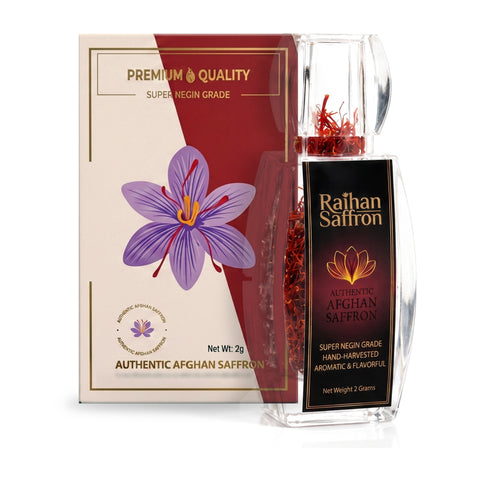
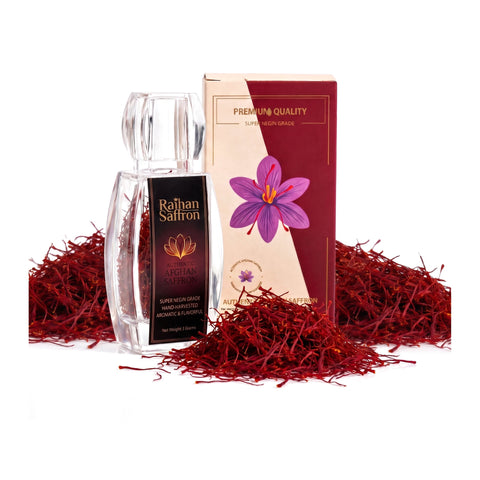
Herat Super Negin — hand-imported, lab-graded, harvest-dated.
Raihan works with family farms in the Herat highlands and grades every lot to ISO 3632 Category I — our current lots test Crocin 296.5. Hand-packed in Lynn, Massachusetts.
Shop Herat saffron See the lab reportThe harvest bottles
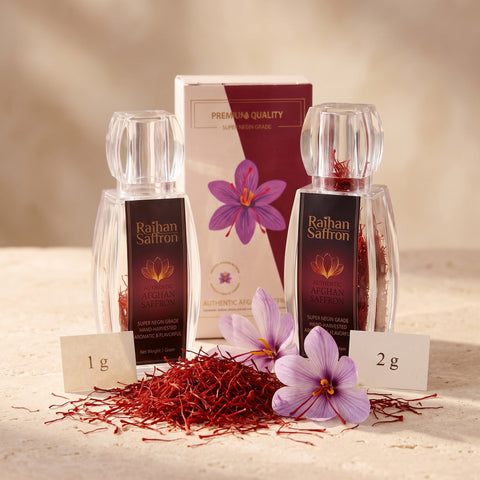
Lab-graded Super Negin — pick your size
Frequently asked questions
Which country has the best saffron?
Grade matters more than country — a high-grade lot from any origin beats a low-grade one.
Is Afghan saffron better than Iranian saffron?
Herat and Iranian Khorasan share almost the same climate. On average Herat Negin tests slightly higher for crocin, but day to day the two are peers. Availability differs more than quality: Afghan saffron imports cleanly into the US, while Iranian is limited by sanctions.
Is Kashmiri saffron worth the price?
If you can verify the source, yes — Kashmiri Mongra is prized as the most aromatic. But real Kashmiri is rare and expensive; “Kashmiri saffron” selling for $5 on Amazon is almost always safflower.
Can I buy Iranian saffron in the US?
Small personal-use quantities are legal as food, but commercial import is restricted by US sanctions, so most “Iranian saffron” sold here passes through a third country first.
What is the difference between Spanish and Iranian saffron?
Real Spanish output is small, and much of the “Spanish saffron” sold today is genuinely Iranian saffron repacked in Spain. Be skeptical of cheap Spanish saffron online.
Origin narrows the field, but the label on the jar still has to be backed by proof — our guide to the best saffron brands in the USA shows which importers actually name their region and publish testing.