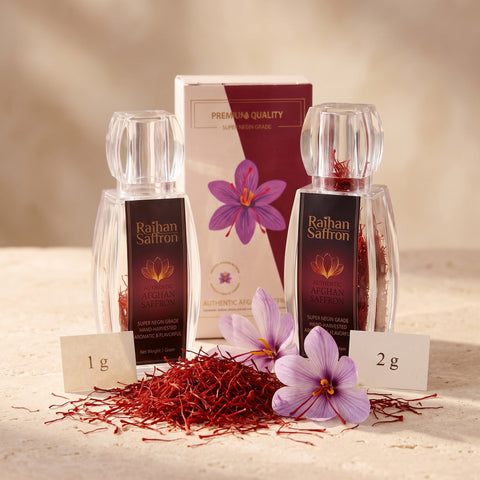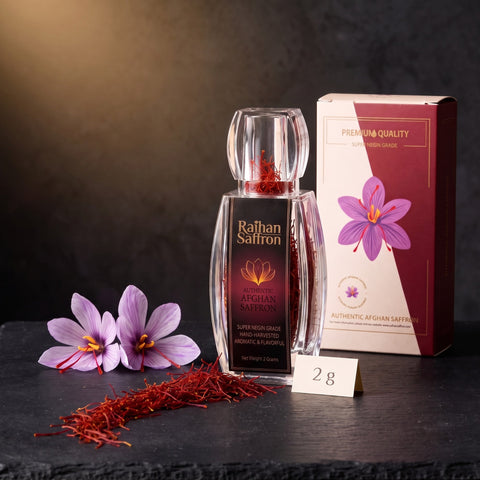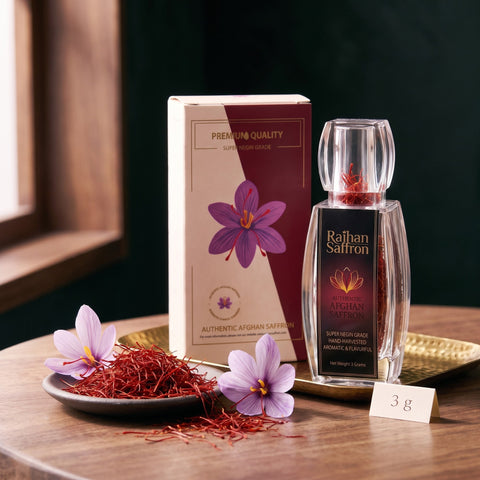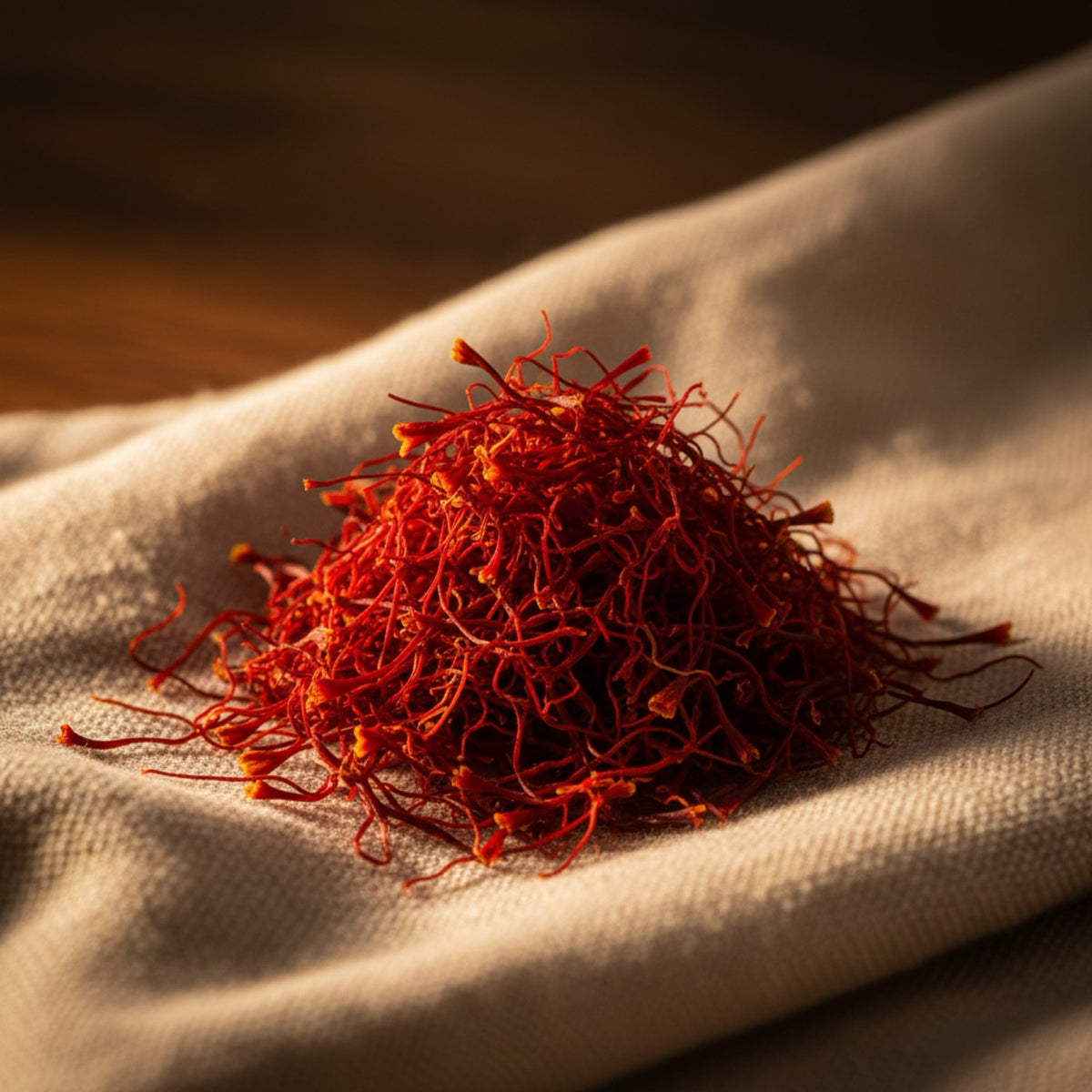

Quick answer. Store saffron in its original airtight bottle (or an amber glass jar), in a cool dark cabinet, away from heat sources. Properly stored, whole threads keep their color and aroma for about two years and remain safe to use beyond that — they just slowly fade. Do not store saffron in the fridge or freezer.
The four enemies of saffron
- Light — bleaches crocin (the color compound).
- Heat — evaporates safranal (the aroma compound).
- Moisture — promotes mold.
- Air — slowly oxidizes everything.
Solve all four with an airtight, opaque container in a cool dark cabinet.
Where to keep it
- Best: A pantry shelf or kitchen drawer away from the oven, the dishwasher, and direct sunlight.
- Acceptable: A cool cabinet above the fridge (but not directly on top, where heat collects).
- Avoid: Spice racks above the stove. Inside the refrigerator (the door swings introduce moisture). The freezer (condensation when you open it).
Can I store saffron in the fridge?
No — the refrigerator is one of the worst places for saffron. Every time the door opens, warm humid air meets the cold bottle and condensation forms inside it. That moisture clumps the threads, dulls the color, and can eventually grow mold. A dry cabinet at room temperature always beats the fridge. The only exception: unopened, vacuum-sealed bulk saffron stored long-term by wholesalers — and even then it must come to room temperature before opening.
Can you freeze saffron?
Freezing is not recommended. Saffron is already dried, so freezing adds no shelf life — but each freeze-thaw cycle pulls condensation onto the threads, damaging exactly what you're trying to protect. If you own more saffron than you'll use in two years, keep it sealed in small airtight glass jars in a dark cabinet instead, and open one jar at a time.
How to store kesar at home
Kesar — the Hindi and Urdu name for saffron — follows the same rules: airtight glass, full darkness, room temperature. For the kesar used in kheer, biryani, or kesar doodh, keep the box or bottle in a cabinet away from the stove, never in the fridge. If your kesar came in a plastic pouch, transfer it to a small glass jar — plastic breathes and lets aroma escape.
Does saffron go bad?
Saffron doesn't go rancid the way oils do. It loses potency — color and aroma weaken — but the threads remain safe to use. If you find an old bottle, smell it. If there's still honey-hay aroma, it's usable.
How to tell when your saffron is past its prime
- Faded red color (orange or brown).
- Weak or absent aroma.
- Threads that bleed only weakly in water.
When that happens, double the dose or replace the bottle.
Restaurant and wholesale storage
Larger bottles (10 g+) should be portioned into smaller airtight containers so the working bottle doesn't get opened daily. Each opening introduces air.
Editor's note
Resist the decorative spice shelf. A clear jar in daylight can visibly fade threads within weeks — keep the working bottle in the dark and let saffron's color show up in the pan, not on the counter.
FAQ
Should I refrigerate saffron?
No. Refrigerator humidity and door-swing condensation damage the threads. A cool, dark, dry cabinet is better in every case.
How long does saffron last?
About two years at peak color and aroma when stored airtight and dark — and it stays safe to use after that, just weaker. Check the harvest date on the bottle.
What's the expiration date on a Raihan bottle?
We print harvest year + "Best within 2 years."
Continue reading
Saffron Packaging: Tin vs. Glass vs. Plastic Bag
The storage container matters as much as the method
Light, air, and heat are what break down crocin — the compound behind saffron’s color and potency. Whatever you buy, decant it into an airtight, dark container the day it arrives. Every Raihan bottle is sealed for repeated daily access, so it doubles as proper storage: see the 3 g, 5 g, and 10 g bottles, or compare every size in the shop.