For most of the last century, the word "saffron" meant one thing: Iran. Iranian fields produced the majority of the world's crop, and the global trade simply assumed that. But in the last twenty years, a quieter story has taken shape in the dust-and-rose-colored highlands of western Afghanistan — and today, threads from Herat are tested, graded, and sold at the very top of the market, sometimes outscoring their Iranian neighbors on the ISO 3632 lab tests that determine quality.
This is the story of how that happened, and why we source from Herat.
Saffron in Herat: an old crop, a new chapter
Saffron is not new to Afghanistan. Crocus sativus has grown across the Khorasan region — a historical territory spanning eastern Iran and western Afghanistan — for more than a thousand years. The bulb traveled with traders along the Silk Road, and Herat, a city that has been a crossroads of Persian, Central Asian, and Indian culture since antiquity, sat squarely in its path.
What changed in this century is the scale. After 2001, several agricultural development programs — initially supported by international agencies, later sustained by Afghan farming families — began promoting saffron as a high-value alternative to the opium poppy. Saffron offered something rare in Afghan agriculture: a crop that grew well in the dry, mineral-rich soils of Herat province, required relatively little water, and sold for more per gram than almost anything else legal.
Why Herat specifically
Three things make the Herat plateau unusually suited to saffron:
- Altitude. Most of the cultivation sits between 3,000 and 5,000 feet above sea level. The cool nights and warm, dry days during the autumn flowering window produce stigmas with higher concentrations of the three compounds graders care about — crocin (color), picrocrocin (taste), and safranal (aroma).
- Soil. Calcareous, well-drained, slightly alkaline. Crocus sativus hates wet feet, and Herat's soils drain quickly after the brief winter rains.
- Climate. A long, hot, dry summer forces the corms into deep dormancy. When the first cool nights of October arrive, the flowers push up almost overnight — and the entire harvest window is over within four to six weeks.
Editor's note
Saffron is closer to a vintage crop than a pantry staple: color and aroma are at their peak in the first year or two after drying, then fade slowly. When you buy, look for a stated harvest date rather than a vague best-by date, keep the bottle sealed away from light and heat, and let a slow 15-minute bloom — not a hard boil — do the work of drawing the crocin out.
The harvest: dawn, by hand, every year
If you have never seen a saffron harvest, the first thing that surprises you is the scale of the labor. The flowers open at dawn and must be picked the same morning — the petals close and the stigmas degrade by the afternoon sun. The window in Herat runs from roughly mid-October to mid-November, depending on elevation and rainfall.
A skilled picker can harvest several thousand flowers an hour, but each flower contains only three stigmas. After picking, the flowers are carried in flat baskets to a separation table — almost always in a farmer's home — where the red stigmas are pinched away from the white-and-yellow style by hand. This is the moment that decides grade. A picker who pulls only the deep red stigma tip will produce Super Negin; a picker who includes some of the pale style produces a lower grade.
The stigmas are then dried — traditionally on cloth in a shaded, ventilated room over two to three days, more recently in low-temperature dehydrators that preserve volatile aroma compounds. By the end of harvest week, what arrived as forty kilograms of fresh flowers in the morning has become roughly one kilogram of dried saffron.
A women-led industry
One of the quieter shifts in Herat's saffron economy is who is doing the work. Picking and separating saffron has, by tradition and by economics, become predominantly women's work. In Herat province specifically, women-led teams now manage entire stages of the supply chain — from field labor to drying, sorting, and packaging. For many rural households, saffron income is the family's primary cash earnings.
This matters for buyers. With saffron from our family's own fields in the Herat highlands, the people separating the threads are also the people whose income depends on grade, and the quality of the work shows up in the bottle.
Why Afghan threads test high
The international standard for saffron quality is ISO 3632, which grades saffron in three categories — color (crocin), taste (picrocrocin), and aroma (safranal). Category I is the top category, and it is what high-end markets buy. Our own lot is ISO 3632 Category I on the tested parameters (lab report 004389: crocin 296.5, picrocrocin 114.2, safranal 32.7).
There are a few likely reasons Herati saffron can test this high:
- Herati harvests are mostly small and recent, so corms tend to be younger and more vigorous (saffron yield and intensity decline as a corm field ages).
- Careful hand-sorting is rewarded over volume.
- The dry, high-altitude climate concentrates the stigma's active compounds.
- The supply chain is short — most Herati saffron is dried, sorted, and packaged within a few miles of where it was picked.
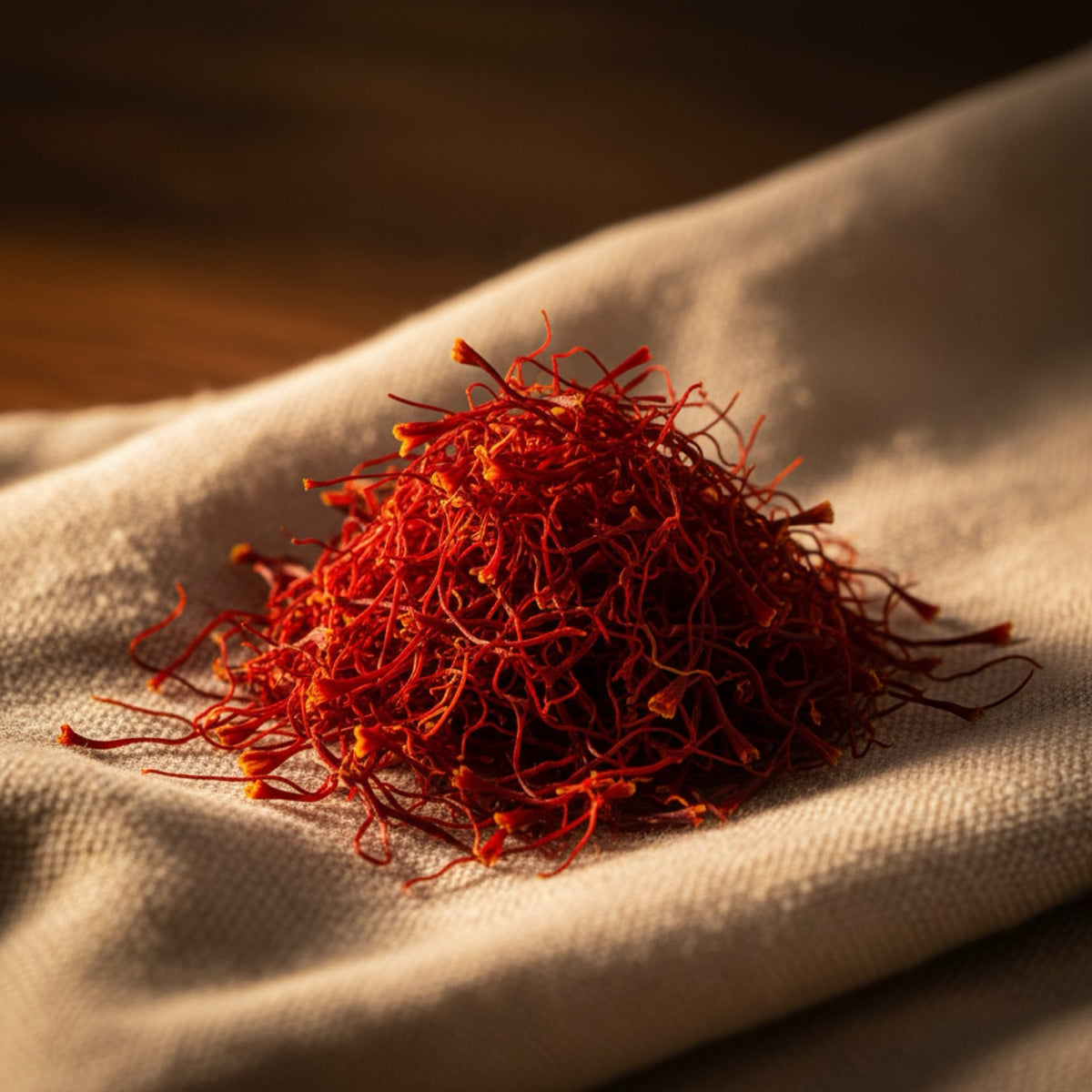
The result is a thread that tends to be longer, deeper red, and more aromatic than the average Iranian sample at the same nominal grade. We have written more on how the grades compare in our guide to saffron grades.

How to use Raihan Super Negin saffron for the Afghan table
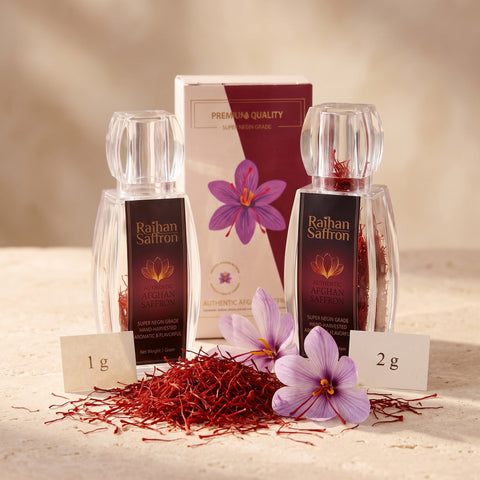
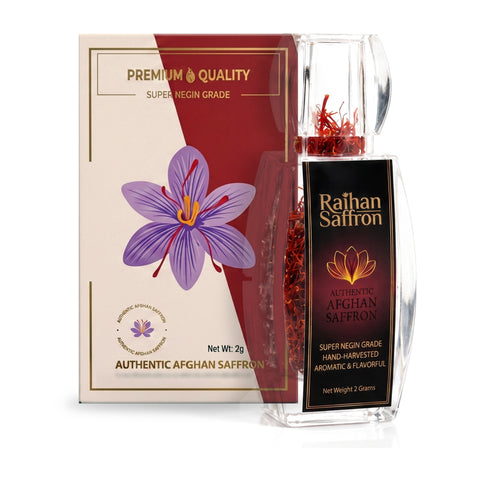
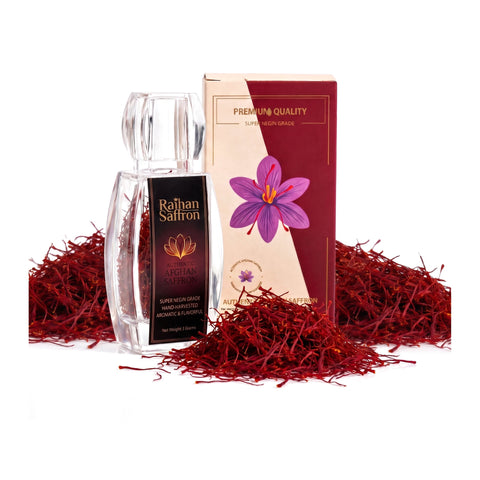
Our threads come from Herati farms and arrive in Lynn, Massachusetts in small batches, where we hand-pack them in 1 g to 10 g acrylic bottles. To taste what Afghan saffron actually does to a dish, we suggest starting with the classic that built the cuisine around the spice:
- Kabuli pulao — long-grain basmati layered with caramelized onion, carrot, raisin, lamb shank, and a generous bloom of saffron. The dish is essentially designed to showcase the spice.
- Saffron-cardamom tea — three to five threads bloomed in a small splash of warm water, then added to a pot of black tea with crushed green cardamom. Honey to finish.
- Sheer berenj — Afghan saffron rice pudding, slow-cooked with milk, rosewater, and a heavy pinch of bloomed threads.
For all of these, bloom the saffron first in warm (not boiling) water for at least 15 minutes. This unlocks the color and aroma that make Herati threads worth the price. Browse the full range in our saffron collection, and read the story of how we source directly from Herat.
Frequently asked questions
Is Afghan saffron really better than Iranian saffron?
At the highest grade — Super Negin — Herati saffron tends to test as well as or better than Iranian saffron on ISO 3632 metrics. Below that grade, the comparison gets fuzzier and depends heavily on the specific farm and harvest. The honest answer is that the best Afghan and the best Iranian saffron are both excellent; the difference at the top is small and largely a matter of aromatic profile.
Why is Afghan saffron sometimes hard to find in the US?
Volume. Afghan saffron is still a tiny share of global production — roughly one to two percent — and most of what's harvested stays in regional markets across South and Central Asia. Direct-import brands like ours bring small batches from Herat into the US.
Does buying Afghan saffron support farmers in Afghanistan?
When you buy from a brand that sources directly from Herat, yes — meaningfully so. Saffron is one of the few rural cash crops in Herat that pays farmers a real living wage, and much of the picking and sorting is done by women.
How long has saffron been grown in Herat?
The earliest references to saffron in the Khorasan region — which includes Herat — date back over a thousand years, though the modern, export-oriented industry is largely a post-2001 development.
The thread, from Herat to your table
Buying Herati saffron is not just buying a better bottle of spice. It is buying into a supply chain that runs from our family's own fields outside Herat, through our packing room in Lynn, to your kitchen — with no anonymous middlemen in between. Start with a 2 g bottle and taste what high-altitude, hand-sorted Super Negin actually does to a pot of rice.
Continue reading
How Much Does Saffron Cost in 2026? Real Prices Per Gram, From the Grocery Aisle to Single-Origin