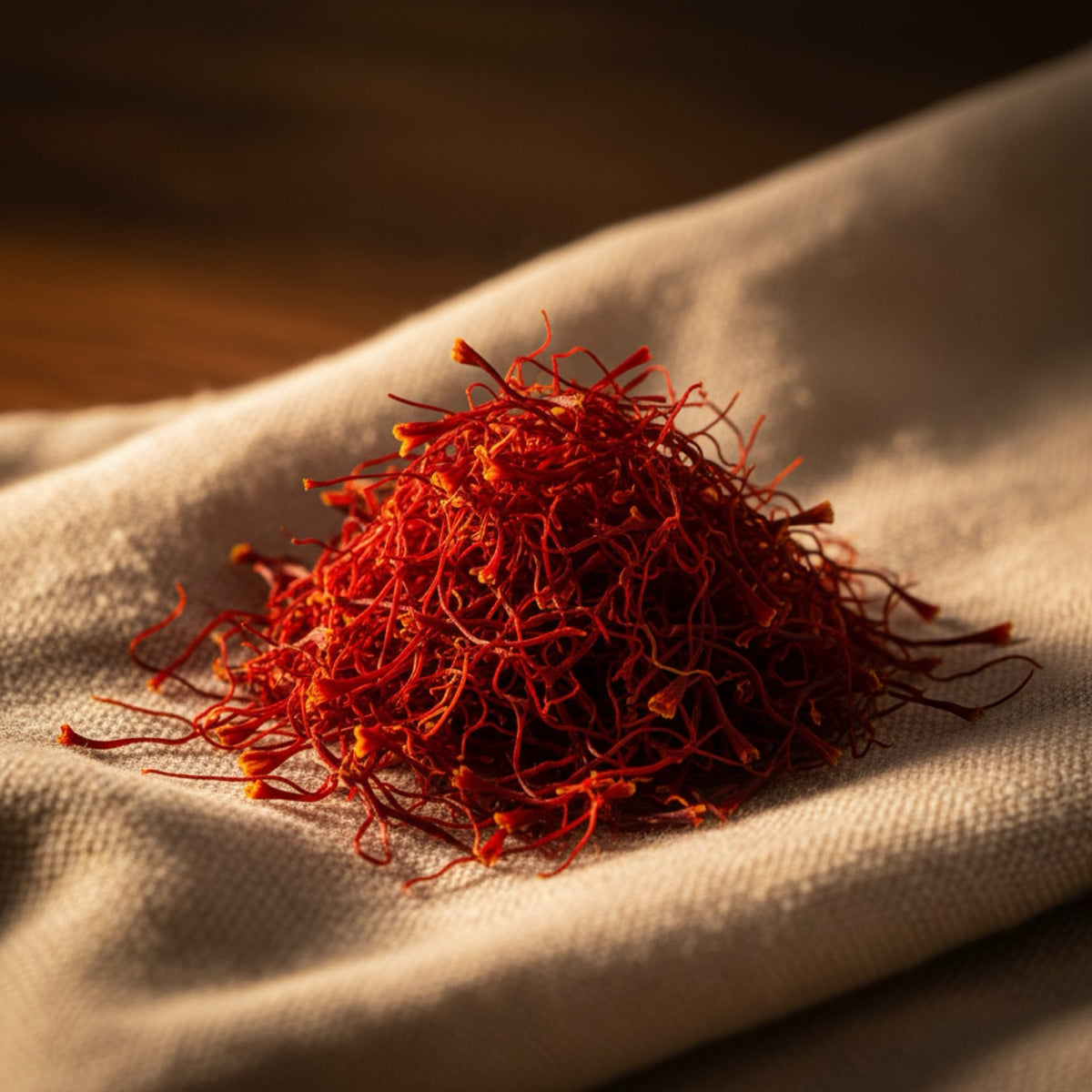

Saffron is the deep-red dried stigma of Crocus sativus. Turmeric is the bright yellow ground rhizome of Curcuma longa — a totally different plant. Safflower is the orange/red dried petal of Carthamus tinctorius — flat, papery, and often sold falsely as cheap "saffron."
Is safflower the same as saffron?
No. They are different plants from different families. Saffron is the hand-picked stigma of the saffron crocus, three red threads to a flower, from the iris family. Safflower is a thistle-like plant in the daisy family, grown mainly for the oil pressed from its seeds; its dried petals are sold cheaply as a food coloring. Saffron is not made from safflower, and safflower oil has nothing to do with saffron. The confusion comes from the color and the names: safflower is sold as "Mexican saffron", "American saffron", "bastard saffron" or simply azafrán, and it is the most common filler in fake saffron.
Safflower vs saffron vs turmeric at a glance
| Saffron | Safflower | Turmeric | |
|---|---|---|---|
| What it is | Stigma of Crocus sativus | Petal of Carthamus tinctorius | Root of Curcuma longa |
| Looks | Dark-red thread with a flared tip | Flat, papery orange-red petal | Yellow powder or knobbly root |
| Smell | Honey, hay, leather | Almost none | Earthy, peppery |
| Taste | Floral, gently bitter | Bland | Earthy, sharp |
| In warm water | Slow golden color; thread stays red | Fast orange-red bleed | Instant cloudy yellow |
| US price, 2026 | $5–$26 a gram | About $0.15 a gram | About $0.05 a gram |
The lot in the bottle
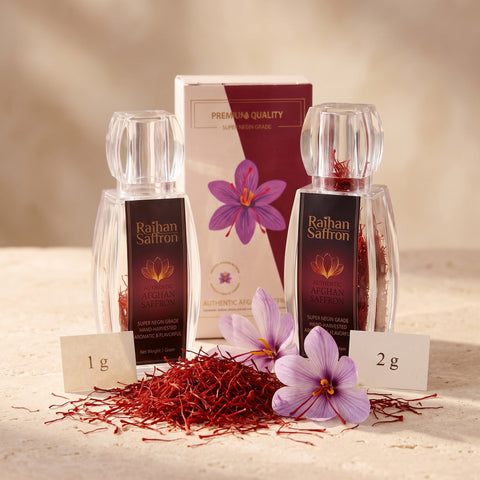
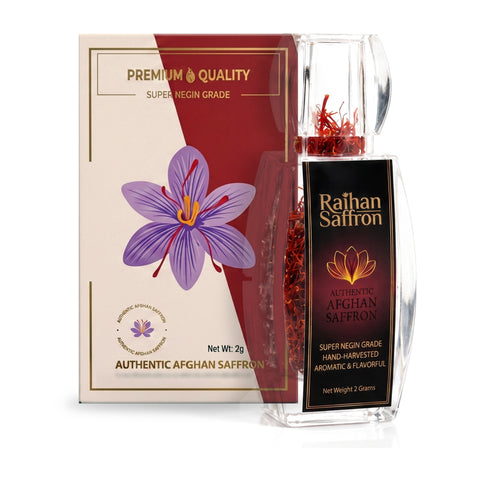
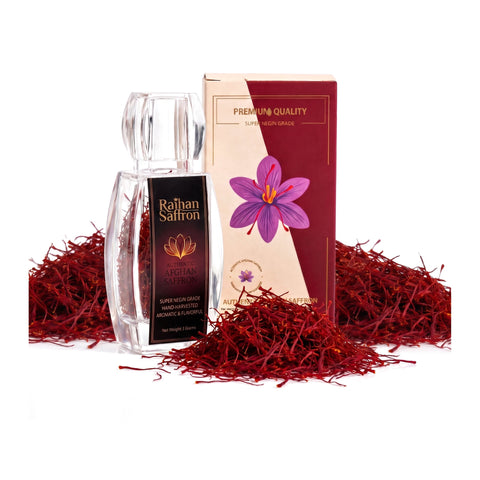
Everything below is written by a saffron seller, so here is the evidence first. Our current lot carries Herat government laboratory report 004389: crocin 296.5, picrocrocin 114.2, safranal 32.7. That is ISO 3632 Category I on every tested parameter. About 250 all-red threads to the gram, hand-packed in Lynn, Massachusetts.
Visual differences
- Saffron: Trumpet-shaped threads, dark red, slightly oily, 4–7 mm long.
- Turmeric: Bright yellow powder or knobbly fresh root; never thread-shaped.
- Safflower: Flat orange-red petals, dry and papery, 5–15 mm.
Smell
- Saffron: Honey, hay, leather.
- Turmeric: Earthy, slightly peppery.
- Safflower: Almost no smell.
Editor's note
Buy saffron only as whole threads, never powder. A ground blend can hide turmeric, safflower, or dye invisibly — intact trumpet-shaped stigmas are the one form that cannot be faked at a glance.
Taste
- Saffron: Floral, slightly bitter, long finish.
- Turmeric: Earthy-bitter, slightly sharp.
- Safflower: Bland.
In water
- Saffron: Slowly turns water clear golden, threads stay red.
- Turmeric: Immediately turns water cloudy bright yellow.
- Safflower: Bleeds bright red/orange immediately, petals stay petal-colored.
Price per gram (US retail, 2026)
- Saffron: $5–$26/g; lab-graded Super Negin $10–$20/g (see the 2026 saffron price guide).
- Turmeric: $0.05/g.
- Safflower: $0.15/g.
If something marketed as saffron costs less than $2/g, it almost certainly isn't.
Why "Mexican saffron" is safflower
In Mexican and many Latin American markets, the loose red-orange petals labeled azafrán are usually safflower. They are an honest, inexpensive coloring in their own right. The trouble starts only when the same petals are sold abroad, or online, as saffron. Real saffron is always a thread with a flared, trumpet-shaped tip, never a petal, and it is never cheap.
Is saffron the same as turmeric?
No. Turmeric is the root of Curcuma longa, a relative of ginger, dried and ground to a yellow powder; the trade has long nicknamed it "Indian saffron". It colors food yellow rather than gold and tastes earthy rather than floral. A pinch can stand in for saffron's color, never its flavor: see saffron substitutes, ranked.

When to use which
Saffron: Final flavoring of rice, broth, tea, desserts. Use in pinches.
Turmeric: Curries, golden milk, marinades. Use by the teaspoon.
Safflower: As an honest replacement when saffron isn't available — for color only, not flavor.
FAQ
Q: Can I substitute turmeric for saffron? For color, kind of. For flavor, no — they taste totally different.
Q: Is "American saffron" real saffron? No — "American saffron" is a 19th-century nickname for safflower.
Q: Why does some "saffron" stain my fingers red instantly? That's a sign of dye or safflower, not real saffron (which stains yellow-orange).
Continue reading