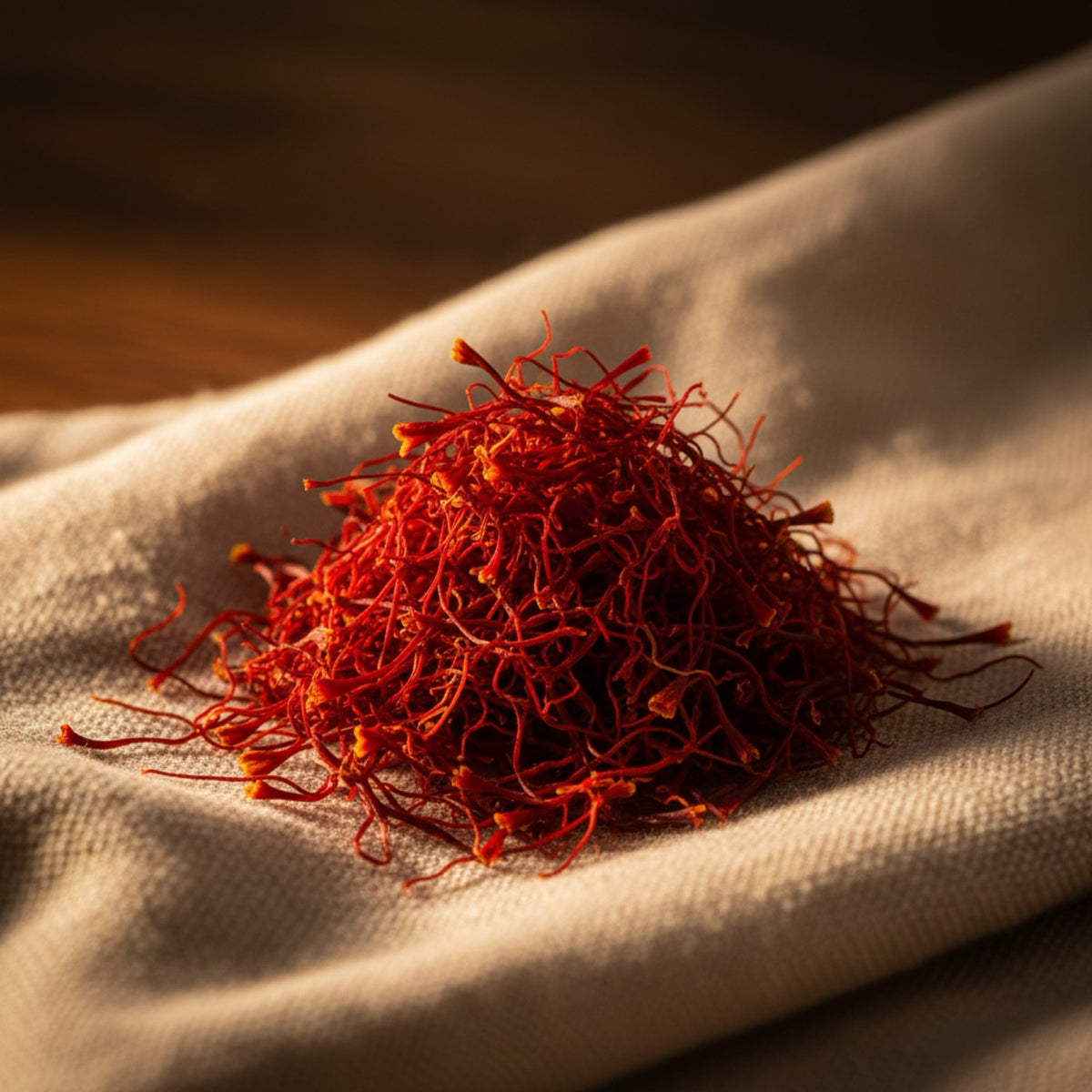

Quick answer. In Persian cooking, saffron is everywhere — but always restrained. The classic uses: a bloomed pinch folded into white basmati to make chelow, a separate pile of saffron rice placed on top, the golden tahdig crust at the bottom of the pot, and as the defining color of stews like khoresh-e fesenjan and desserts like sholeh zard.
Bloomed saffron is the foundation
Every Persian saffron dish starts with the same step: 20–30 threads in 2–3 tablespoons of warm water (or rosewater), 15 minutes. The bloom liquid then enters the dish.
Editor's note
For tahdig, hold back a portion of your bloom liquid and add it to the rice at the very end, off the heat. The color keeps deepening for several minutes after the threads are removed from contact with the grains.
Tahdig: the famous crust
Tahdig — literally "bottom of the pot" — is a buttery, saffron-yellow crust formed by cooking basmati in two stages. The bloom water is folded into a couple of spoonfuls of cooked rice, which then forms the bottom layer in melted butter.
Chelow vs. polo
Chelow is plain white rice. Polo is rice cooked with other ingredients. Saffron-bloomed rice can top either.
Stews (khoresh)
- Khoresh-e fesenjan: Walnut, pomegranate, chicken or duck. Saffron mellows the tang.
- Khoresh-e gheymeh: Yellow split peas, tomato, lamb. Saffron adds depth.
- Khoresh-e bademjan: Eggplant, tomato, lamb. A small pinch of saffron in the broth.

Sweets
- Sholeh zard: Rice pudding with saffron, rosewater, and slivered almonds.
- Bastani sonati: Saffron-rosewater ice cream with pistachios.
- Saffron sherbet (sharbat): A summertime cold drink with rosewater and crushed ice.
Tea
Persian saffron tea is brewed strong, with cardamom and a piece of rock sugar.
Continue reading