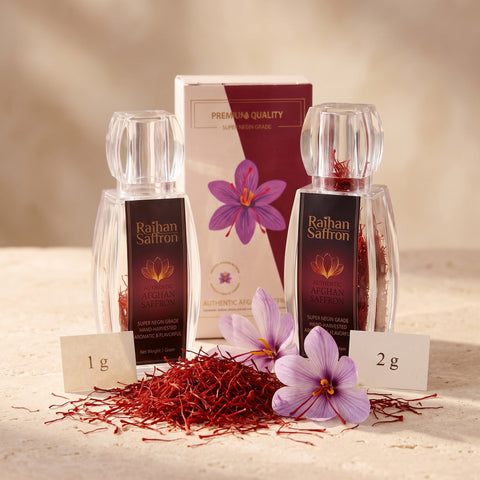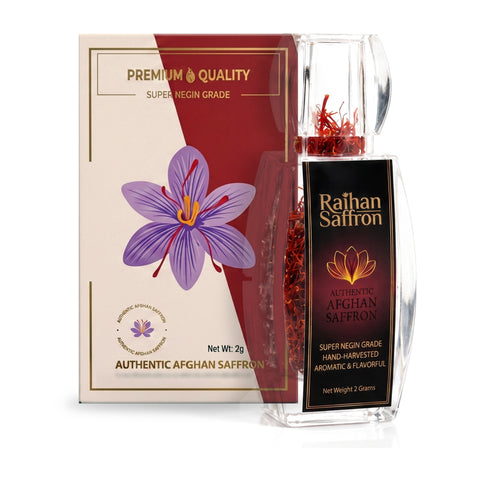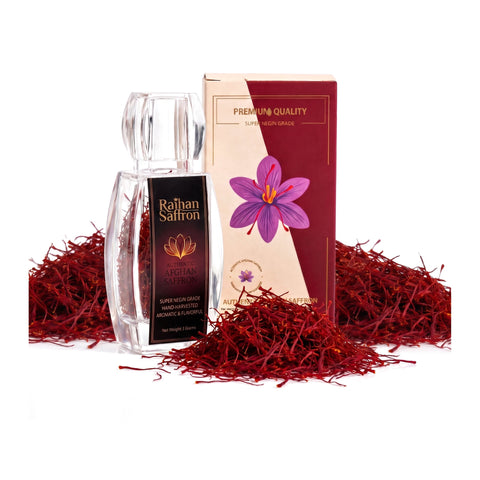

Sealed glass is best — inert, airtight with a good seal, and it lets you inspect the threads before you buy; its one weakness, light, is solved by a dark cabinet or the opaque box it ships in. Tin is an acceptable second — opaque and airtight, though you can't see what you're buying. Plastic bag is the worst — it lets in light and oxygen and crushes threads. This is exactly why Raihan ships its saffron in sealed crystal-clear bottles inside an opaque burgundy gift box. If you receive saffron in a bag, transfer it to a sealed glass jar or bottle immediately.
Tin
Opaque, airtight, easy to seal. The traditional saffron container for a reason.
Editor's note
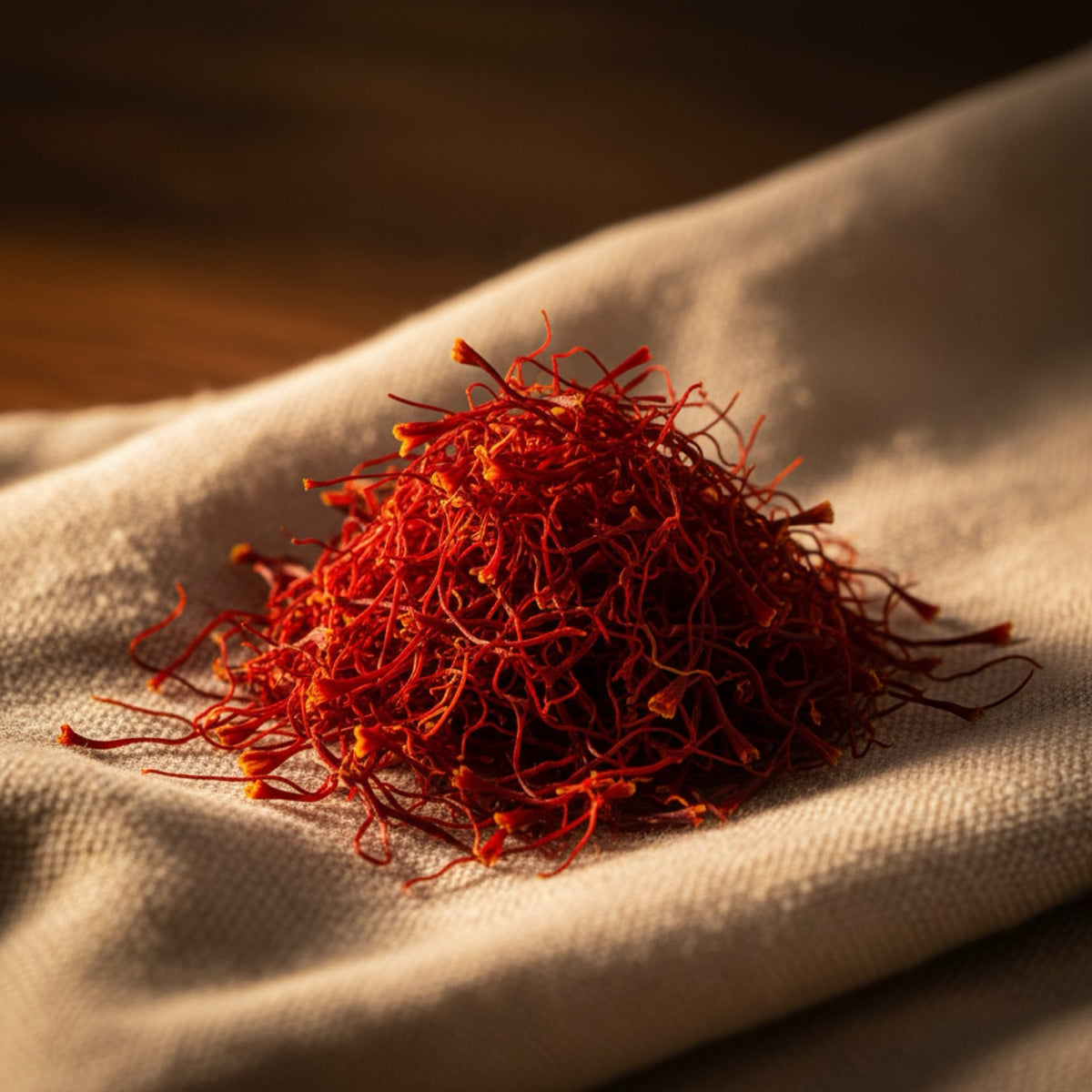
Whatever the vessel, keep threads whole until the day you cook. Grinding ahead multiplies the surface exposed to oxygen, and aroma that would last years in a sealed bottle fades in weeks as powder.
Amber glass
Beautiful, easy to see threads through. Slight light penetration — keep in a dark cabinet anyway.

Plastic bag
The worst of all worlds: not airtight after opening, not opaque, easy to crush. Transfer immediately.
Continue reading