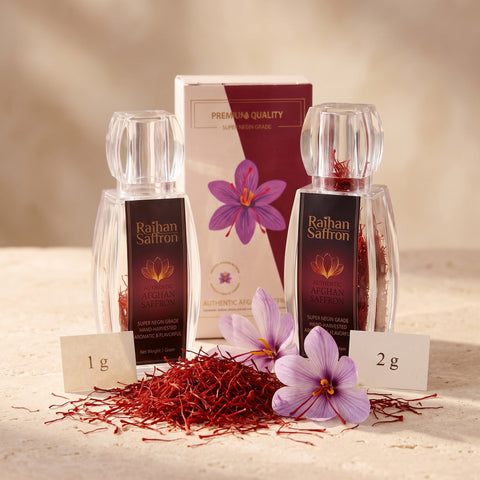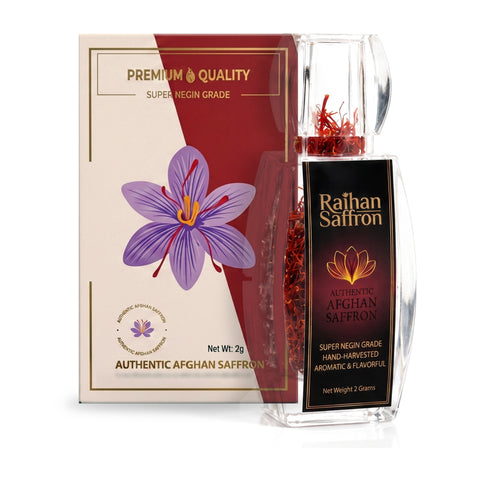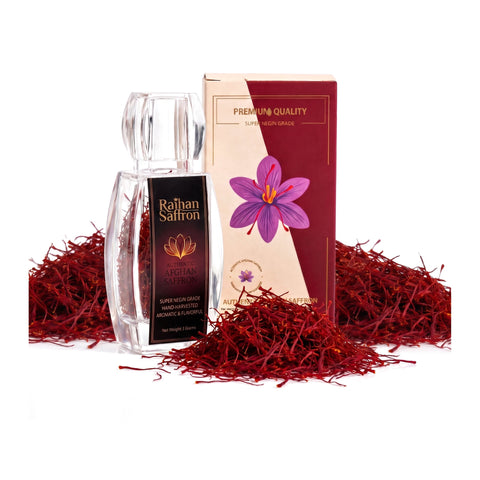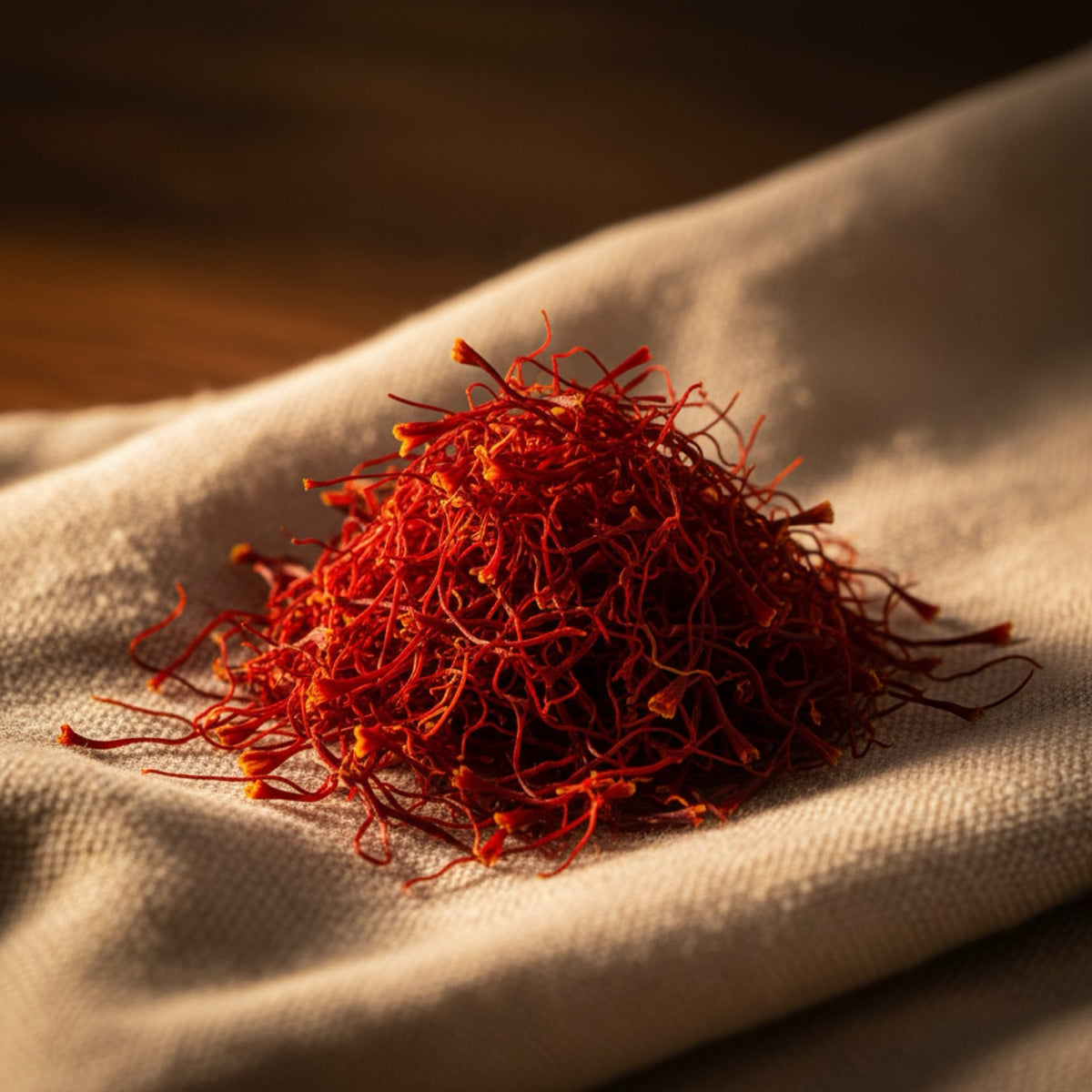

Saffron has been cultivated for more than 3,500 years. The earliest evidence is Minoan frescoes on Crete (~1500 BCE). It traveled along the Silk Road through Persia, Mesopotamia, and India, reached Spain with the Moors in the 10th century, and arrived in England by the 14th. Today, Iran produces about 90% of the world's supply; Afghanistan — especially Herat — has rebuilt a reputation for the world's most concentrated all-red threads.
Bronze Age beginnings
Frescoes at Akrotiri on the Greek island of Santorini show women harvesting saffron crocus around 1600 BCE. Saffron appears in the Ebers Papyrus (Egypt, c. 1550 BCE) as both a perfume and a medicine, and Cleopatra reportedly bathed in it.
Editor's note
One habit the old spice merchants would recognize: check the harvest year before you buy. Saffron's color and aroma compounds fade with time, so a dated bottle from last autumn's picking will always outperform an undated jar of unknown age.
The Silk Road and Persian dominance
By the 6th century BCE, saffron was a major commodity in Persia, used in royal banquets, religious offerings, and textile dyeing. Persian saffron threads were traded as far as China and Greece.
Saffron in the Islamic Golden Age
Arab traders carried saffron across North Africa and into Spain in the 10th century. The Spanish word azafrán comes from the Arabic za'farān (يَعْفران). Andalusian cooks introduced it to European cuisine.
Saffron in medieval Europe
Saffron was so valuable in 14th-century Europe that towns were named after it (Saffron Walden in England), and falsifying saffron was a capital crime in Nuremberg under the Safranschau laws.
Herat: the modern center of all-red saffron
Herat province in western Afghanistan has been growing saffron for over a thousand years. The region's altitude, soil, and dry climate produce threads with exceptionally high color and aroma compounds. Herat saffron has won multiple international awards for purity since 2010.

Why provenance still matters
Today, saffron travels by air freight and arrives anywhere in 48 hours. But the threads themselves still depend on a tiny window of weather, a careful harvest, and an honest supply chain. The story of where your bottle came from — which field, which year — is half of the value.
Raihan Saffron's place in the story
We hand-import directly from small family farms in Herat, label every bottle with its harvest year, and pack in Lynn, Massachusetts. No anonymous middlemen, no blended lots.
Continue reading
The Saffron Trade: Silk Road to Modern Sanctions