
The short answer
Genuine saffron: $10–$30 per gram in the U.S. (2026).
The short answer: genuine, lab-graded saffron retails for roughly $10–$30 per gram in the United States in 2026. Grocery-store saffron runs $4–$16 per gram. And anything near or below $5 per gram at the 1-gram size deserves real suspicion — saffron is one of the most adulterated foods on earth, and a too-good price is the single most reliable warning sign.
Why saffron costs what it costs
Each saffron crocus produces three red stigmas, picked by hand at dawn on the one morning the flower opens. It takes roughly 150–170 flowers to yield a single gram of dried threads. There is no machine harvest, no shortcut — the price of real saffron is mostly the price of human hands. That is also why fraud is so common: powders cut with safflower, threads dyed with tartrazine, old stock blended with new. Price is your first filter.
What saffron actually costs in 2026 — real prices we checked
These prices were verified in June 2026 from store shelves and official product pages.
| Where | Size | Price | Per gram |
|---|---|---|---|
| Trader Joe's (Spanish) | 0.7 g | ~$5.99 | ~$8.56/g |
| McCormick Gourmet (Spanish) | 1.7 g | ~$18.33 | ~$10.78/g |
| Costco Kirkland organic (Spanish) | 1 g | ~$15.89 | ~$15.89/g |
| Amazon best-sellers (Persian) | 2–5 g | $17–$36 | ~$7–$8.50/g |
| US specialty saffron brands | 1 g | $12–$16 | $12–$16/g |
| Single-farm Kashmiri (GI-protected) | 1 g | $22 | $22/g |
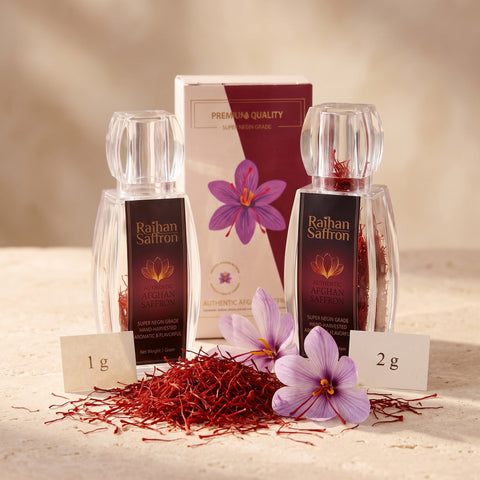
| Raihan Saffron (Afghan Super Negin, lab-graded) Ours | 1 g | $20 | $20.00/g |
Two honest observations from that table. First, the spread is enormous — a 5x difference per gram between the cheapest and the most premium. Second, price tracks documentation, not just origin: the brands at the top of the market publish lab numbers, harvest years, and named growing regions. The brands at the bottom usually publish none of those things. For a brand-by-brand look at what you get at each price, see our honest review of the best saffron brands in the US.
Is cheap supermarket saffron "good"?
Often it's real saffron — but rarely top-grade. Most grocery saffron is Spanish Coupe or Category II, sold without published coloring-strength numbers, and often a year or more from harvest by the time it reaches the shelf. You'll typically need 2–3x the dose to reach the same color and aroma a high-crocin thread delivers, which quietly erases much of the price difference. If a label shows no ISO 3632 category, no crocin number, and no harvest year, you are buying on faith.
The math that actually matters: price per dish
Nobody eats a gram of saffron at once. A pot of rice for four uses 10–15 threads — about 0.05 g (our saffron dosage guide has the exact amount for every dish). A full paella for eight uses about 0.3 g. So a 1-gram tin of strong, fresh saffron is 15–20 family meals:
- At $20 per gram, that is about $1.00–$1.35 per dish — less than the lemon you put in the rice.
- Weak saffron at "half the price" but double the dose costs the same per dish — and still tastes flatter.
Interactive · Value checker
Is that saffron deal real — or a red flag?
The red flags of fake or degraded saffron
- Price far below ~$5/g at small sizes — real saffron economics simply don't allow it.
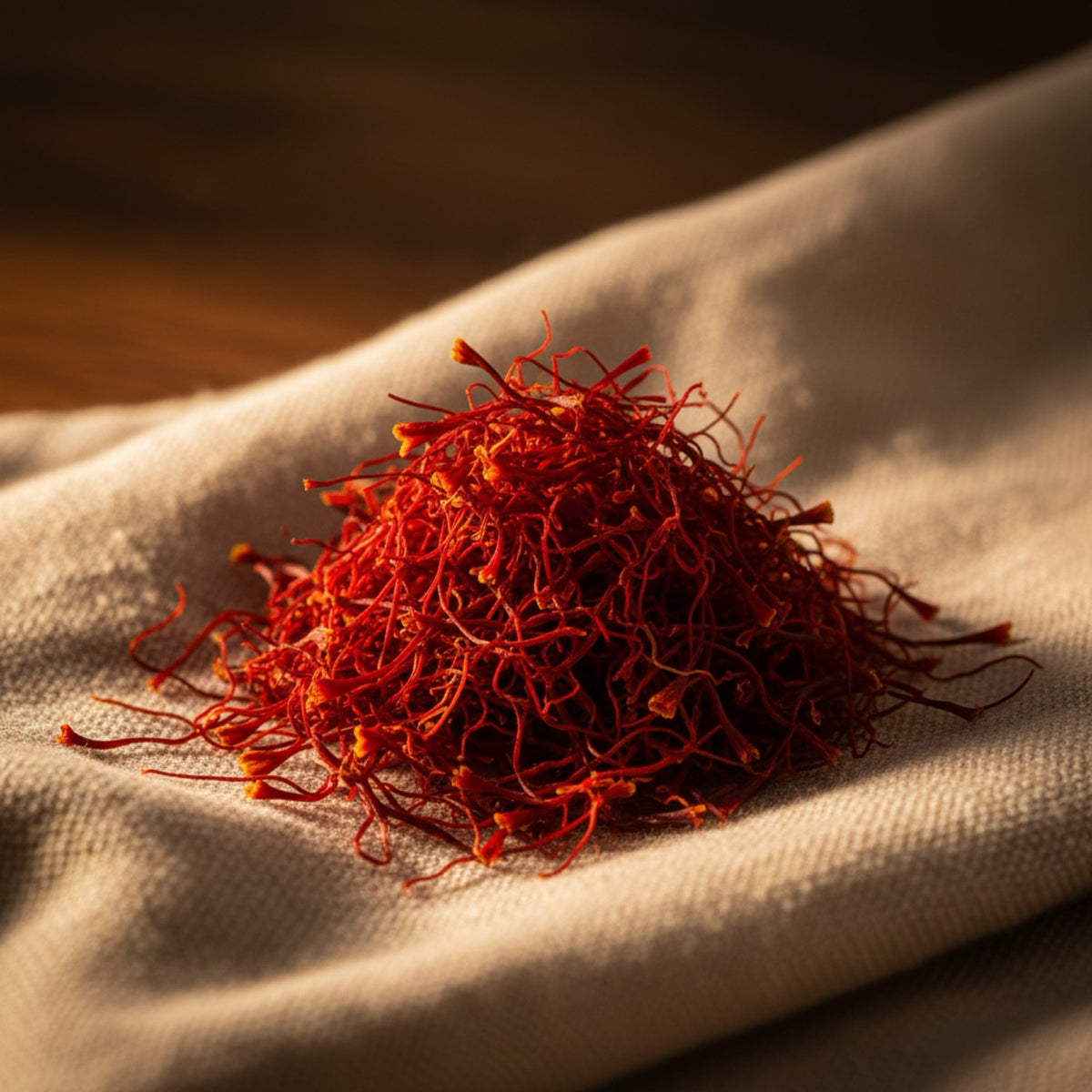
- Powder instead of threads — powder is where substitutes hide. Buy whole threads, always.
- No lab grade — genuine premium saffron states its ISO 3632 category and ideally its crocin (coloring strength) number.
- Instant color release — real saffron releases its gold slowly over 10–15 minutes of blooming; dye bleeds immediately.
- No harvest year — saffron holds peak potency about two years; undated saffron is unaccountable saffron.
How to buy with confidence at any price
Whatever you spend, insist on three things the best sellers all publish and the weak ones rarely do: an ISO 3632 category (Category I is the top grade), a crocin coloring-strength number, and a harvest year on the package. Buy whole threads, never powder, and bloom a few in warm water — real saffron gives up its gold slowly over ten minutes. Those four checks matter more than the logo on the tin.
For reference, this is the standard we hold ourselves to. Raihan's saffron is Afghan Super Negin from Herat, laboratory-graded to ISO 3632 Category I (current lots test 270+ crocin), harvest-dated on every bottle, and hand-packed in Lynn, Massachusetts. Our 1 g is $20, with the per-gram price working out to $15.00 at 3 g, $13.00 at 5 g, and $9.90 at 10 g. You can read the independent lab report here.
Frequently asked questions
How much does 1 gram of saffron cost?
In 2026, genuine retail saffron costs $10–$30 per gram in the US. Grocery brands run $8–$16 per gram; documented, lab-graded single-origin saffron runs $16–$22 per gram.
Why is saffron more expensive than gold by weight?
That comparison is mostly myth at retail — but saffron is the world's costliest spice because one gram requires hand-picking roughly 150–170 flowers at dawn and hand-separating the stigmas the same day.
How many threads are in a gram of saffron?
Roughly 250 threads for long, all-red Super Negin grade — enough for 15–20 family meals or a season of saffron tea.
Is expensive saffron worth it?
Per dish, strong saffron is cheap: about $1.00–$1.35 per meal at $20/g. High-crocin threads need half the dose of weak saffron and deliver more aroma — so the per-dish cost of "expensive" and "cheap" saffron is closer than the per-gram price suggests.
Want to taste the difference once and decide for yourself? Read how to bloom saffron properly so the first cup is the proof.