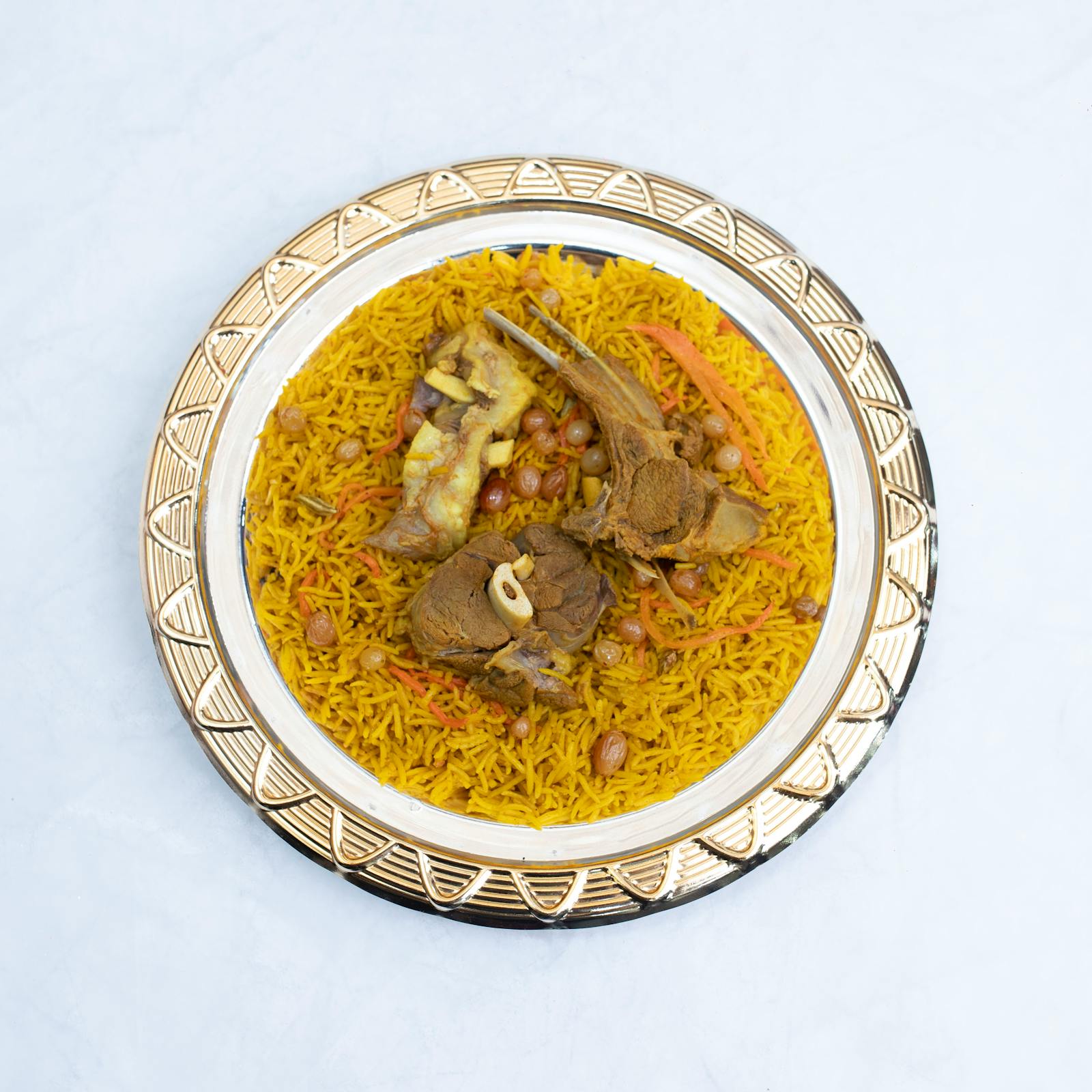
Quick answer. In Persian cooking, saffron is everywhere — but always restrained. The classic uses: a bloomed pinch folded into white basmati to make chelow, a separate pile of saffron rice placed on top, the golden tahdig crust at the bottom of the pot, and as the defining color of stews like khoresh-e fesenjan and desserts like sholeh zard (saffron rice pudding).
Bloomed saffron is the foundation
Every Persian saffron dish starts with the same step: 20–30 threads in 2–3 tablespoons of warm water (or rosewater), 15 minutes. The bloom liquid then enters the dish. See our how to use saffron guide for the technique.
Tahdig: the famous crust
Tahdig — literally "bottom of the pot" — is a buttery, saffron-yellow crust formed by cooking basmati in two stages. The bloom water is folded into a couple of spoonfuls of cooked rice, which then forms the bottom layer in melted butter. Full step-by-step in our Persian saffron rice with tahdig recipe.
Chelow vs. polo
Chelow is plain white rice. Polo is rice cooked with other ingredients (vegetables, herbs, meat). Saffron-bloomed rice can top either.
Stews (khoresh)
- Khoresh-e fesenjan: Walnut, pomegranate, chicken or duck. Saffron mellows the tang.
- Khoresh-e gheymeh: Yellow split peas, tomato, lamb. Saffron adds depth.
- Khoresh-e bademjan: Eggplant, tomato, lamb. A small pinch of saffron in the broth.
Sweets
- Sholeh zard: Rice pudding with saffron, rosewater, and slivered almonds. (Recipe.)
- Bastani sonati: Saffron-rosewater ice cream with pistachios.
- Saffron sherbet (sharbat): A summertime cold drink with rosewater and crushed ice.
Tea
Persian saffron tea is brewed strong, with cardamom and a piece of rock sugar.
Cook Persian this week. Hand-imported Herat saffron for chelow, fesenjan, and sholeh zard. → Shop Raihan Saffron