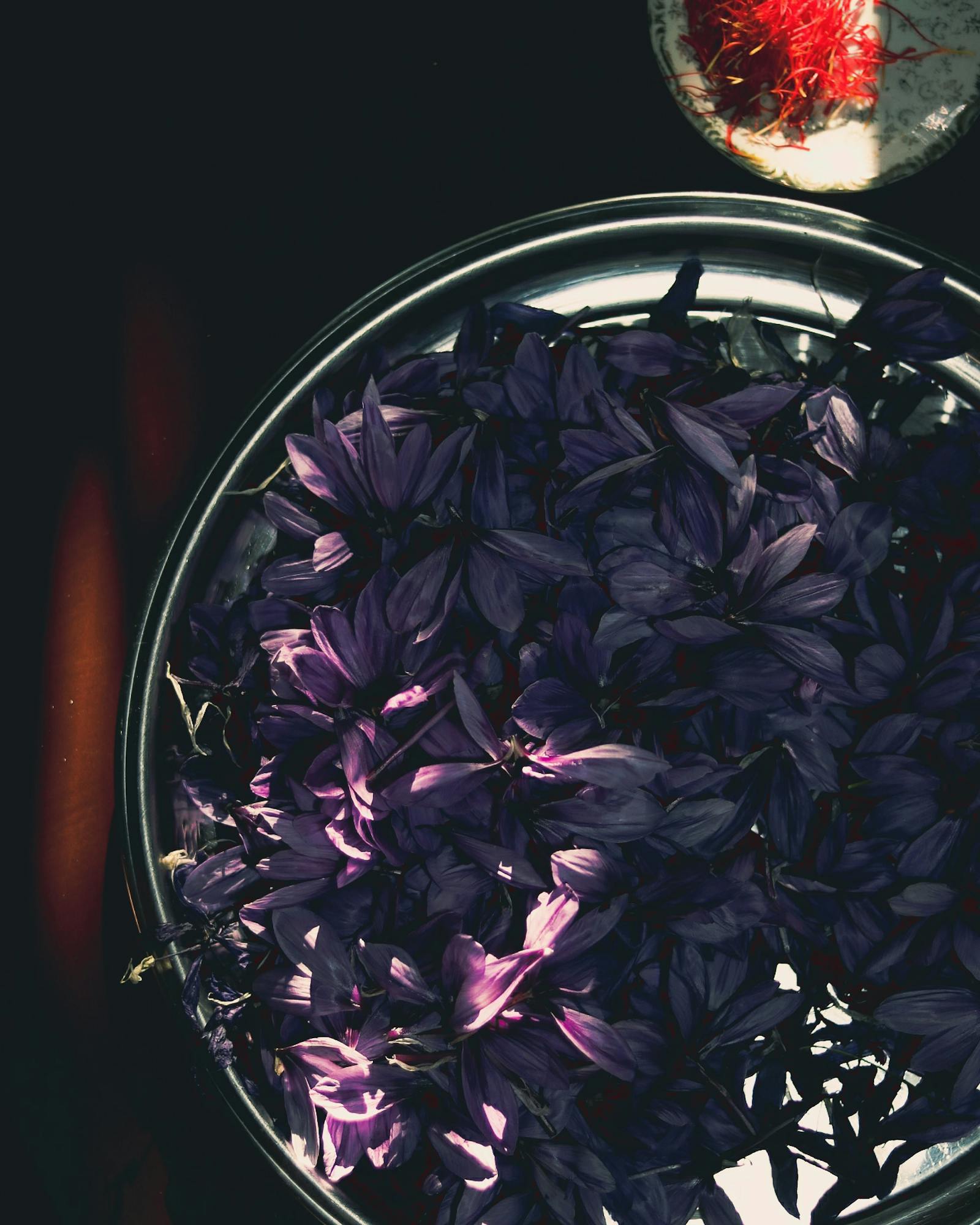
Crocin (a carotenoid) and safranal (a volatile aroma compound) are the most studied antioxidant compounds in saffron. They've been measured for antioxidant activity in lab settings. Eating saffron contributes a small amount of antioxidants to your overall diet — but a varied diet of fruits, vegetables, and whole grains gives you much more.
Crocin
A carotenoid pigment, water-soluble (unusual for carotenoids). Responsible for saffron's yellow color in water. Strong color → strong crocin.
Safranal
A volatile compound that develops during drying. Responsible for the honey-hay aroma. Evaporates quickly with heat, which is why we steep saffron rather than boil it.
Picrocrocin
The bitter taste compound. Breaks down into safranal during drying.
Antioxidants in perspective
Saffron is a flavoring ingredient, not a primary dietary source of antioxidants. Berries, leafy greens, coffee, tea, and nuts all deliver more antioxidants per serving. Saffron's value is sensory.